iOS Beta is Live!

· 3 min read
Kanjiverse
Kanjiverse

It's finally here! This new version is the first one to be released on both Android and iOS at the same time. Invites will be sent by email to anyone enrolled. If you haven't already, you can still enroll on the site.

Version 0.1.12 also adds a bunch of fixes and improvements:

  • long press to copy kanji, words and sentences
  • tap the Home icon to go back to the Dashboard
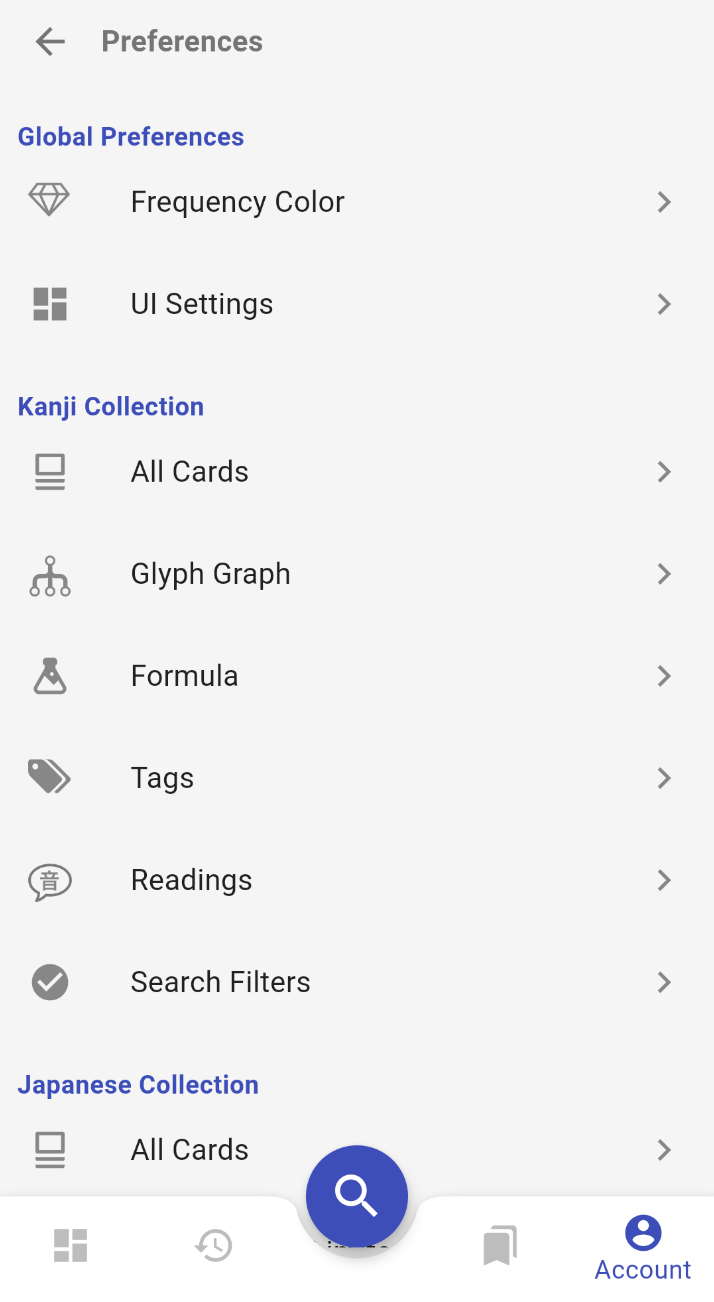
  • easier to read Sans Serif font for large Japanese text, set by default for Novice/Beginner, can also be set in Account > Preferences > Japanese Collection > Font, Furigana and Limits

Happy testing :)

Detailed Changelog of Version 0.1.12

  • Copy kanji, Japanese word or sentences with a long press
    - Displays large Kanji and Japanese text with an easier to read Sans Serif font
    - Sans Serif font is set by default for Novice/Beginner level
    - Sans Serif font can be set in Preferences > Japanese Collection > Font, Furigana and Limits
    - Go back to Dashboard by tapping on the Home button when already on the Home tab
    - Bookmarking a page without being signed in will first prompt the user to Sign In
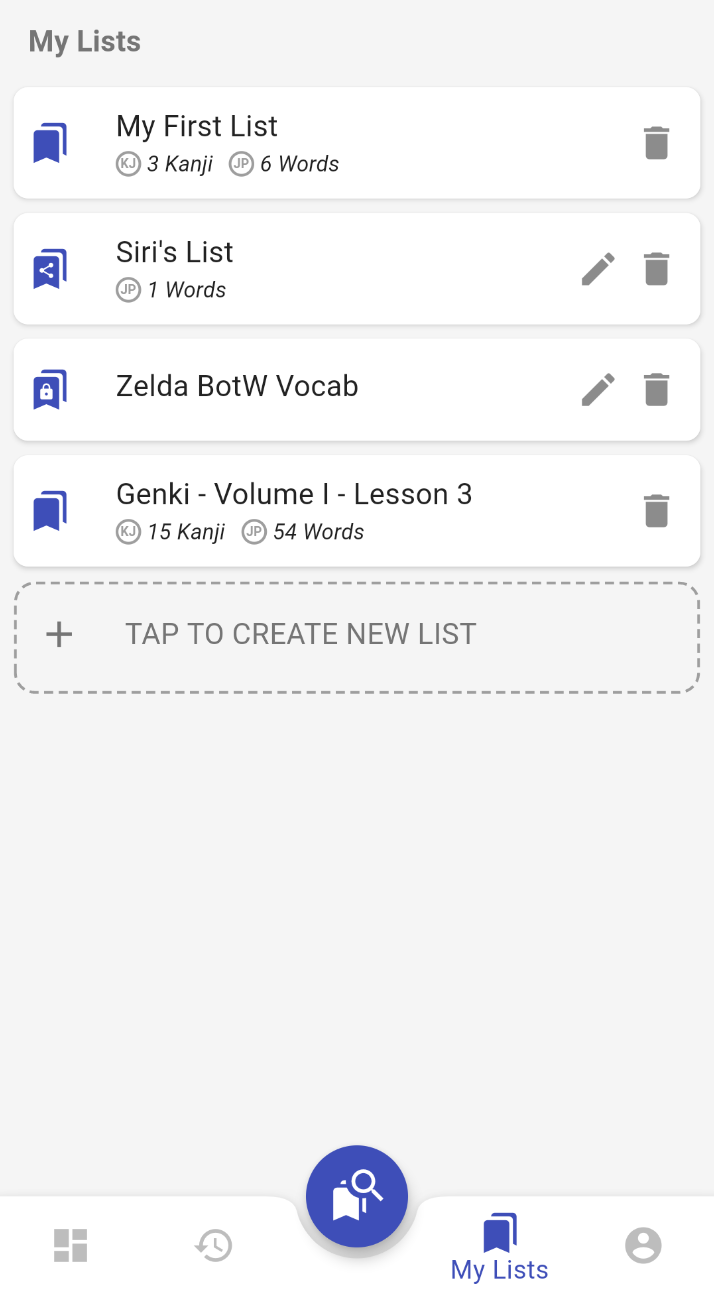
    - Removed edit/delete buttons on the List cards, the buttons are now on the app bar when a List is opened
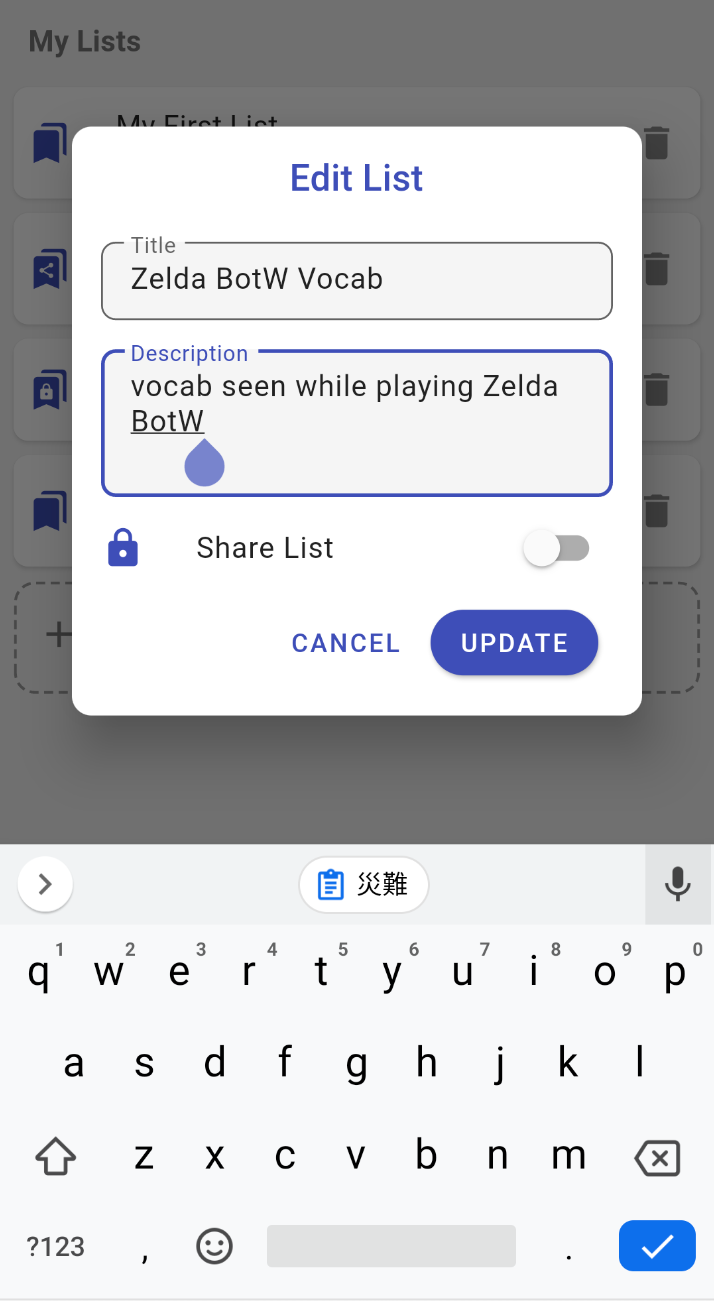
    - Edit List dialog is replaced with a bottom sheet
    - Removed shake bug reporting on ios, use the native testflight screenshot method instead
    - Dashboard shows a Latest News card (triggered remotely with Firebase Remote Config)
    - Dashboard shows an Update Available card when a new version is available
    - Fixed Kanji Readings listing words that do not match the reading
    - Fixed characters spacing in words that have furigana wider than the word itself
    - Fixed keyboard navigation in the Sign In dialog and the Search sheet
    - Fixed background becoming transparent when pressing back on Search Results pages
    - Fixed Bookmark button not working after signing in on pages that were opened before signing in
    - Fixed missing app bar and back button on Search Results pages that have no results
    - Stops automatically opening kanji/word of a List when there is only one item
    - Refreshes the page after updating a List's details
    - Notifies that the Sign In is successful
    - Improves look of navigation bar with color tint and blurred opacity on ios
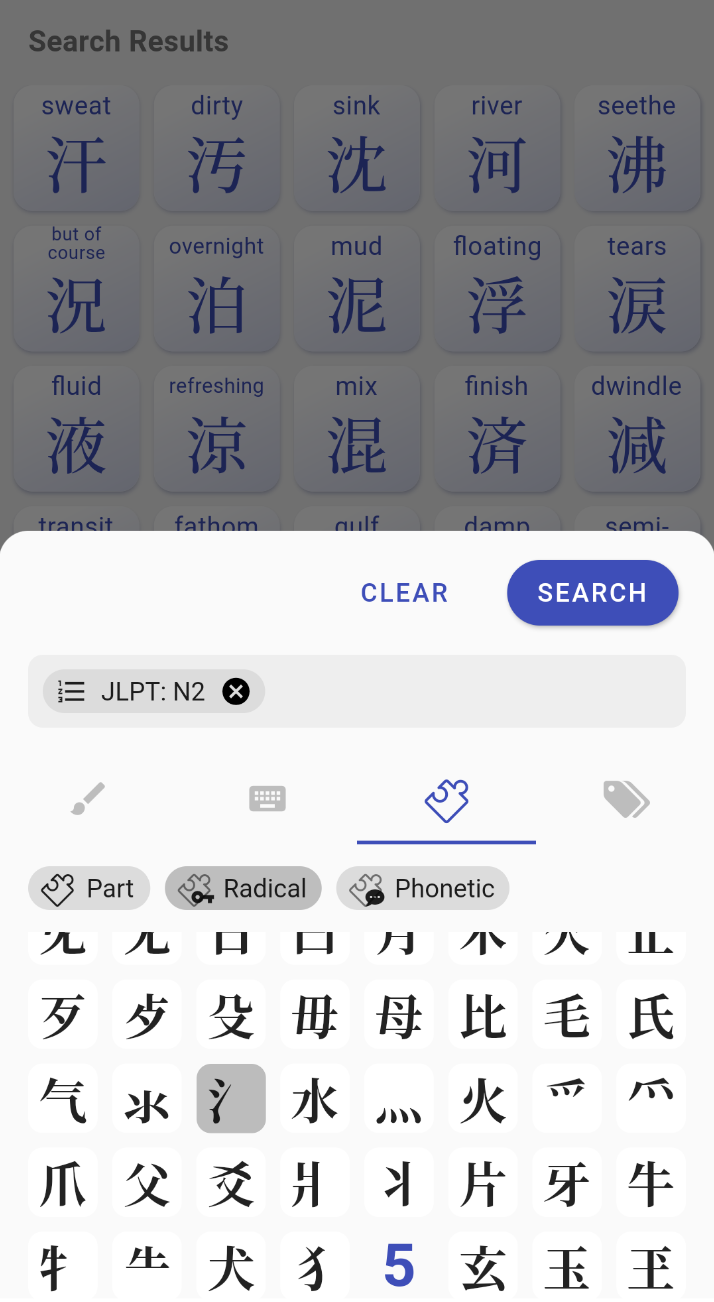
    - Improves look of Search by Radical Input screen with an ios-style Sliding Segment instead of multiple chips
    - Improves shadows softness
    - Improves toast bar notifications look
    - Adds a scrollbar
    - Makes Search Bottom Sheet taller on Radical and Tag Input tabs
    - Adds gradient on Welcome page's title
    - Adds Firebase crashlytics and performance

Autocomplete Fixes and Sort By Filters

· 2 min read
Kanjiverse
Kanjiverse

A new version is available to beta testers on the play store! This release fixes (all?) issues with the autocompletion's suggestion lists (it won't hide outside the screen anymore) and adds a bunch of new filters including the convenient Sort By filters.

Sort By filter autocompletion​

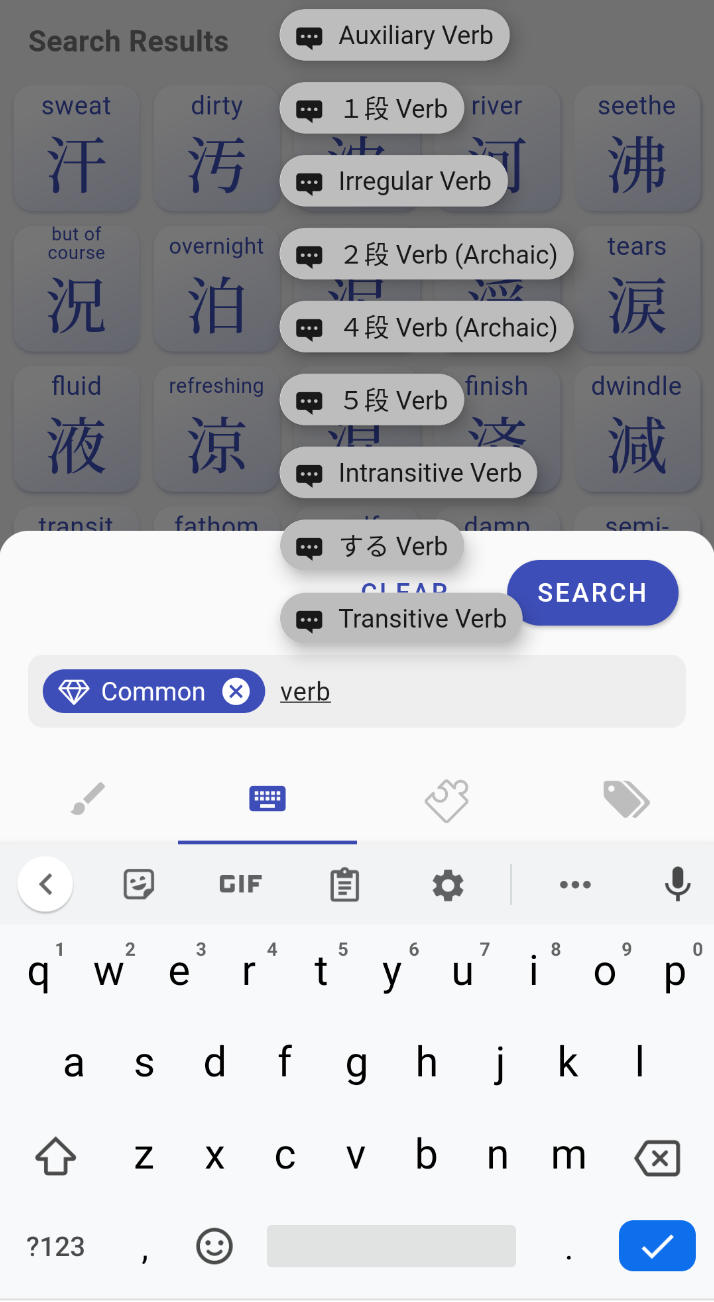
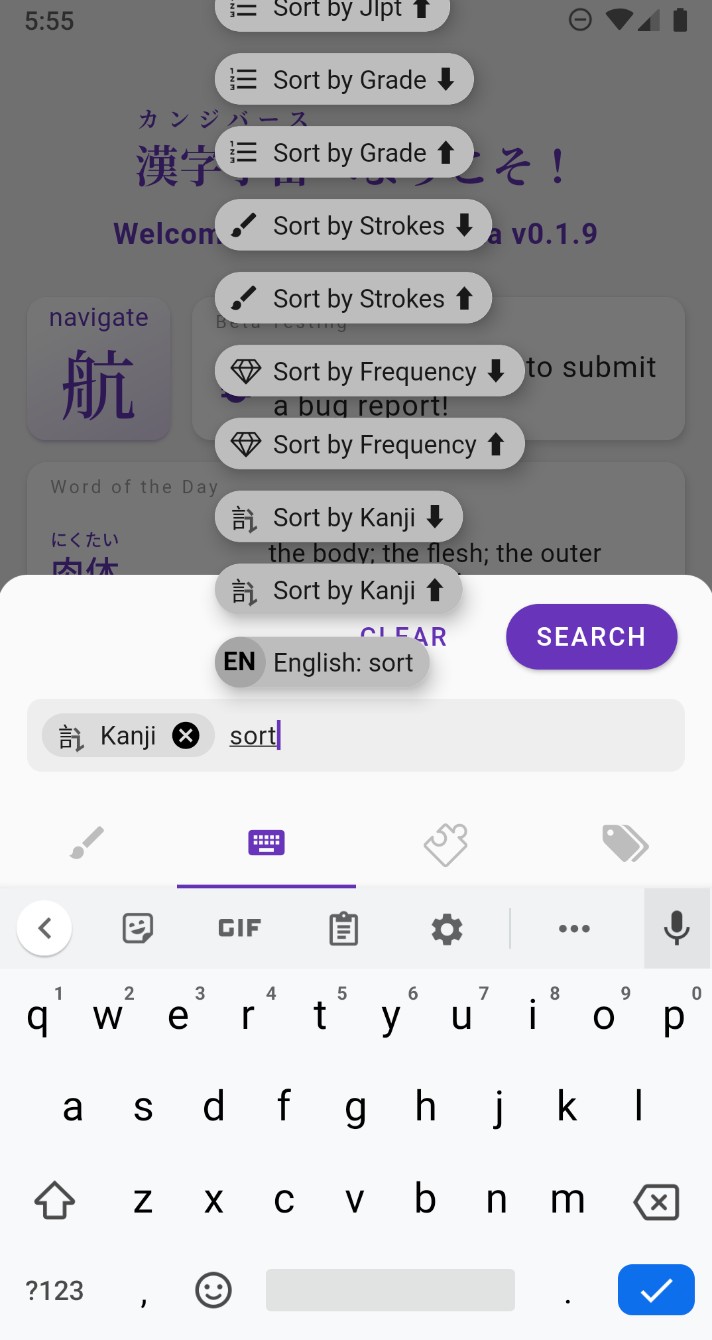
The Sort By filters can be autocompleted when you type "sort" or the name of what you want to sort:

  • sort kanji by character, #strokes, frequency, grade/JLPT/kanken level, glyph composition, glyph formation, references (e.g. RTK index)
  • sort words by Japanese variant, English definition, frequency, part-of-speech (aka grammar), field, dialect, misc
  • sort results in ascending or descending order
  • they can also be chained, in the order you typed them

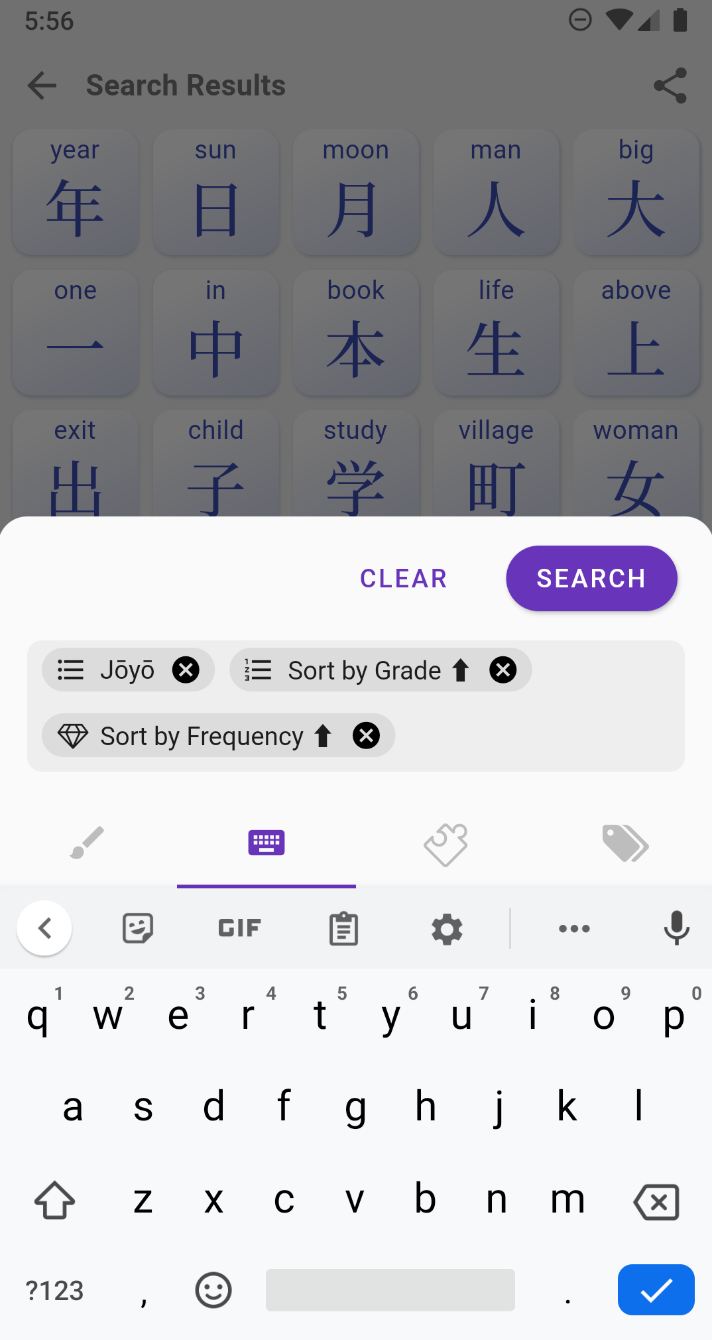
Here are a few examples of what you can do with them (from left to right):

  • sort joyo kanji by grade then frequency
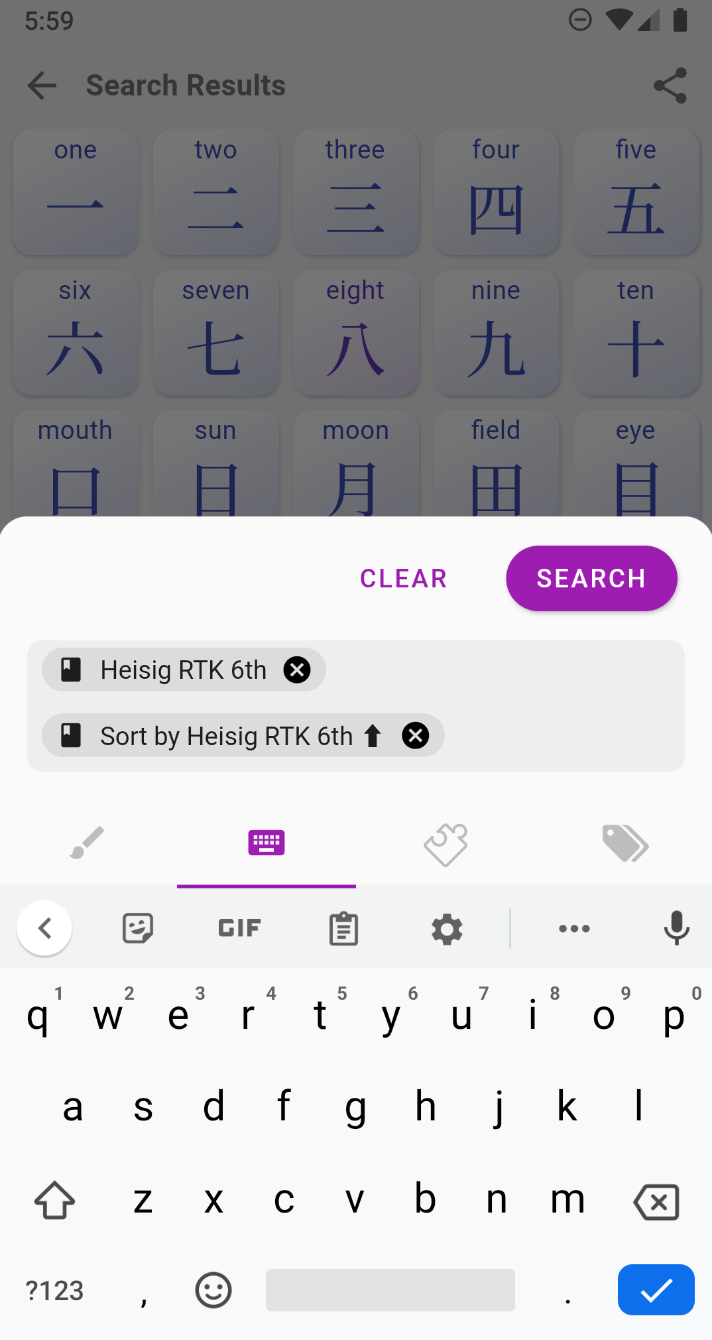
  • sort kanji in their RTK order
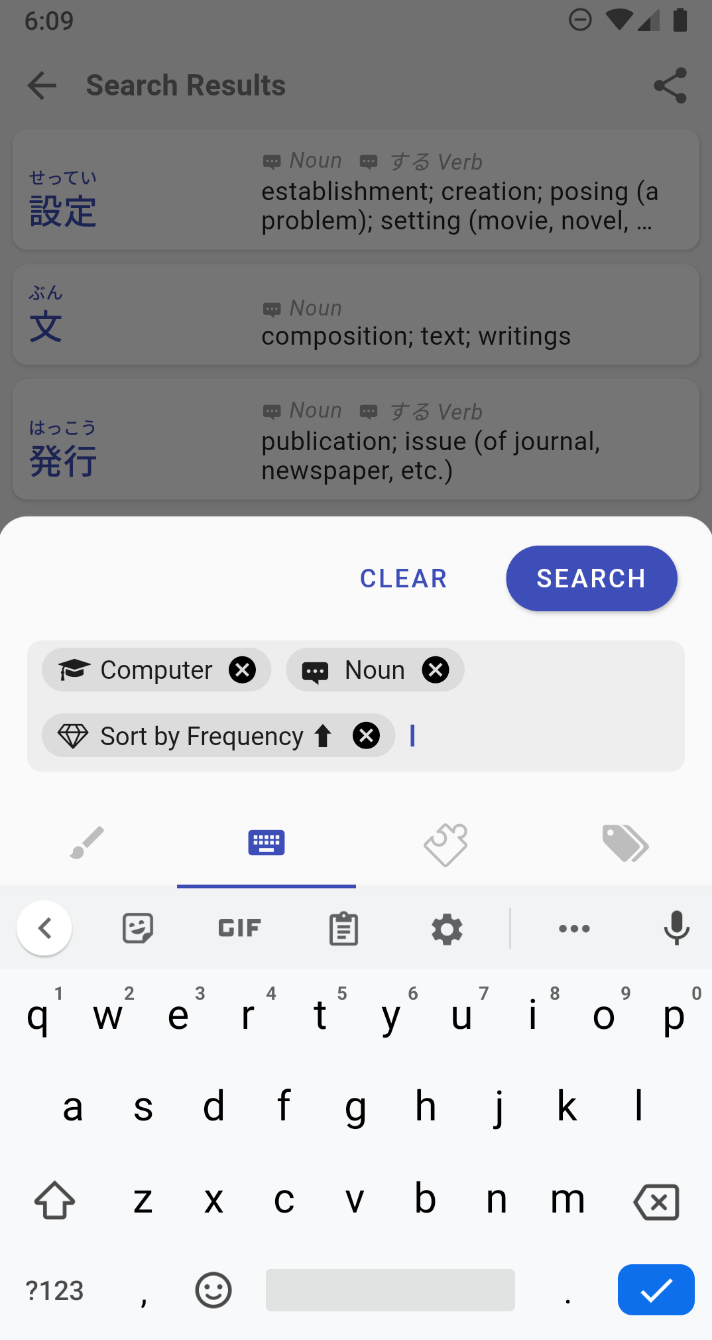
  • sort all computer related nouns by frequency

All the other fixes in version 0.1.10:​

  • adds autocomplete for more filters such as Katakana, Collection, Kanji Readings, References (i.e. RTK, dictionary indices, etc.)
  • fixed search bottom sheet being hidden behind the navigation bar
  • fixed suggestion list overflowing on the right of the screen
  • fixed pressing filter in the search bar make the dialog move behind the navigation bar
  • fixed crash when Kanji has no meanings and no keyword
  • fixed some unrecognized radicals/subcomponents
  • fixes parenthesis and comma issues in kanji meanings
  • fixed * wildcard not working in english words
  • fixed 'any' value not returning anything when searching by level (grade, jlpt, kanken) or references (RTK, wanikani, etc.)
  • fixed suggestion list height overflowing on the top of the screen
  • fixed radicals not being ordered correctly in the radical input method tab
  • changes the font of radicals input to sans serif
  • forces a update of all pages when user switch their level

Sneak Peek Inside the Private Beta

· 6 min read
Kanjiverse
Kanjiverse

Android users will finally be able to get their hands on the first Private Beta! Here is what you can expect.

Collections and Dictionaries​

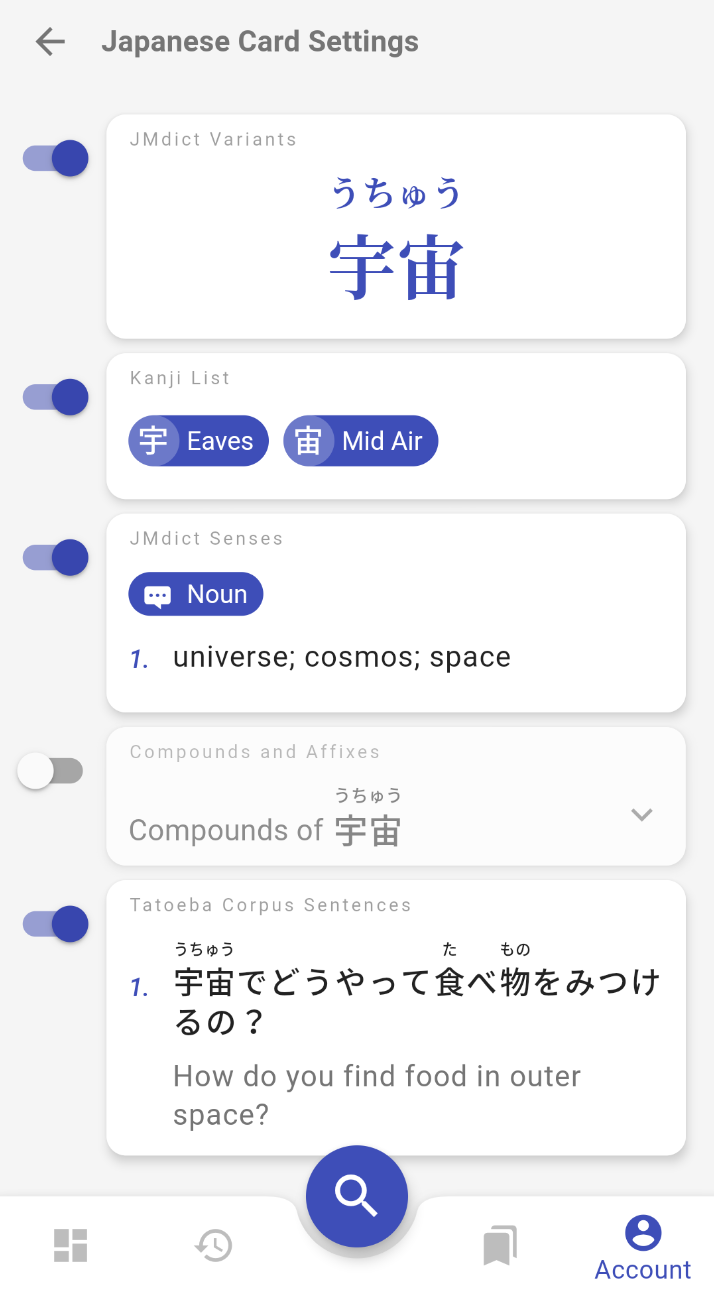
Kanjiverse currently supports two types of collection: Kanji and Japanese (words and expressions). Each page of a collection is a series of customizable cards. New cards will added in the future, here is what's available now.

Kanji Collection​

The Kanji Collection contains 13,108 kanji with the following cards:

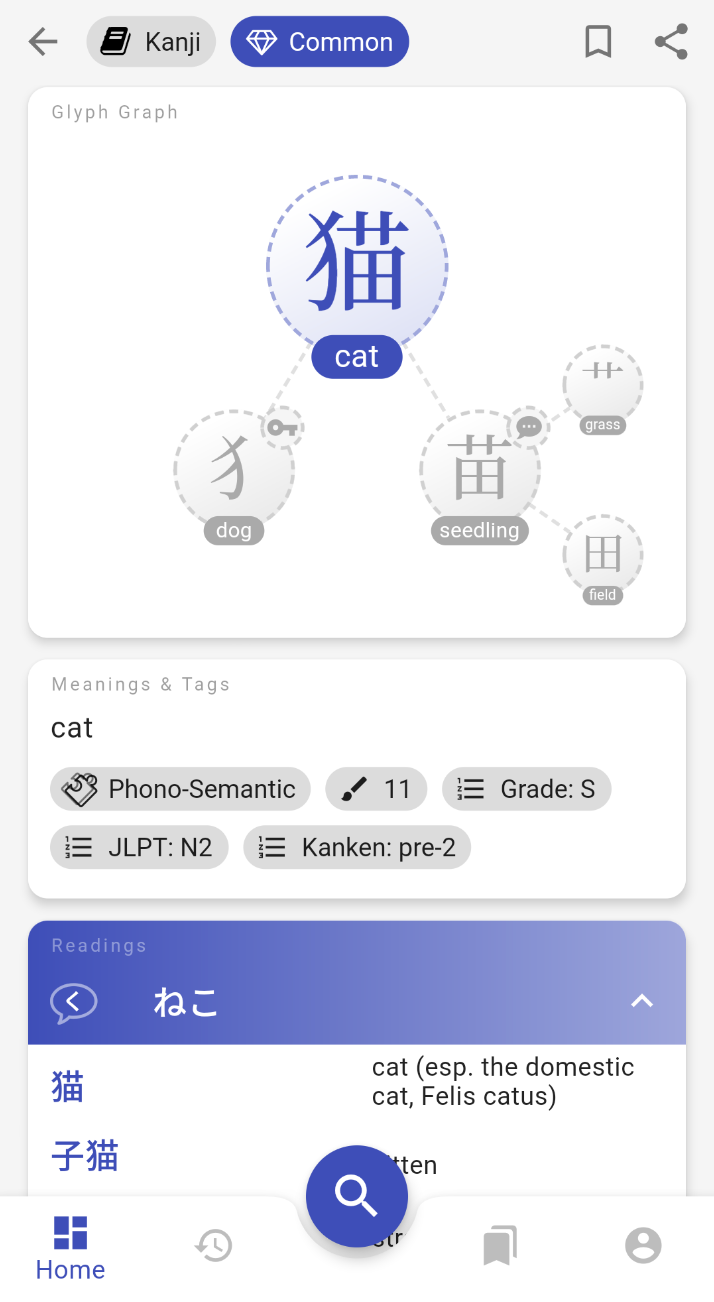
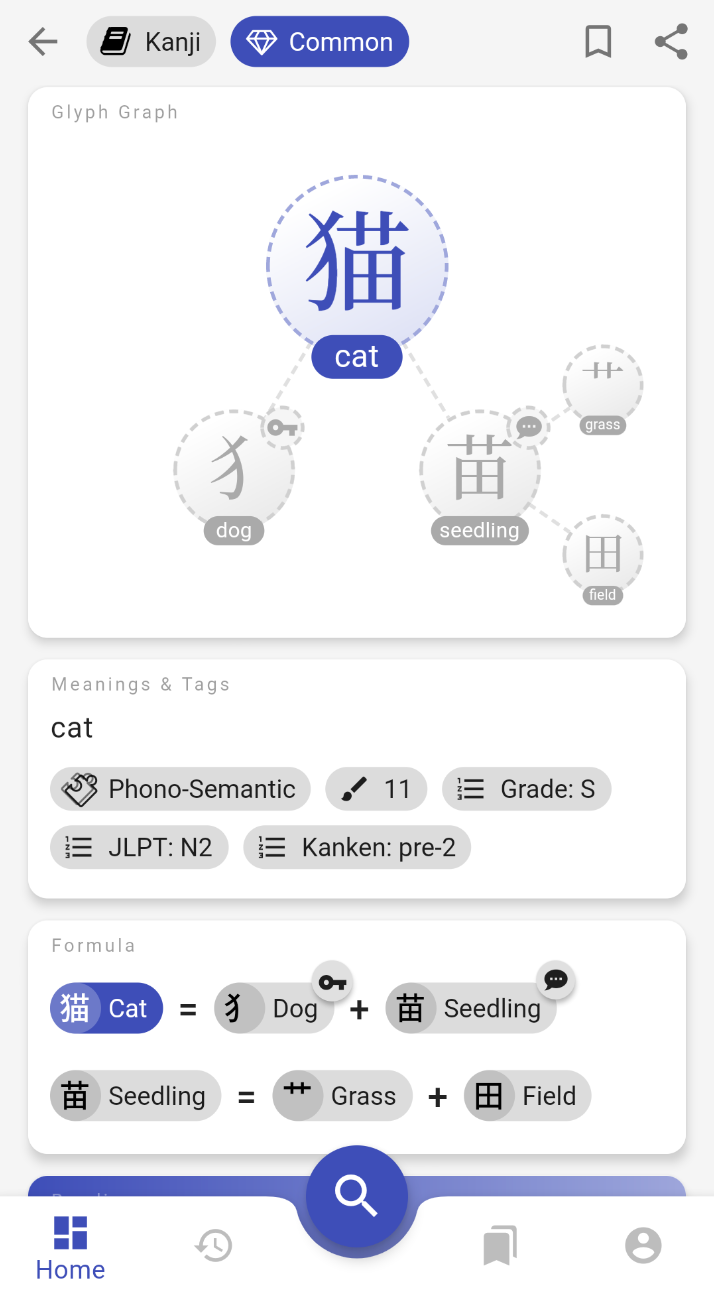
  • Glyph Graph: everyone's favorite, decomposes a kanji into its components and sub-components, tap one of them to zoom in.
  • Formula: a flat version of the Glyph Graph, shows Heisig's Remembering The Kanji (RTK) keyword for each component.
  • Meanings & Tags: various informations about the kanji such as JLPT level, is it a pictogram, is it a joyo, etc. All those tags can be used as filters when doing a search.
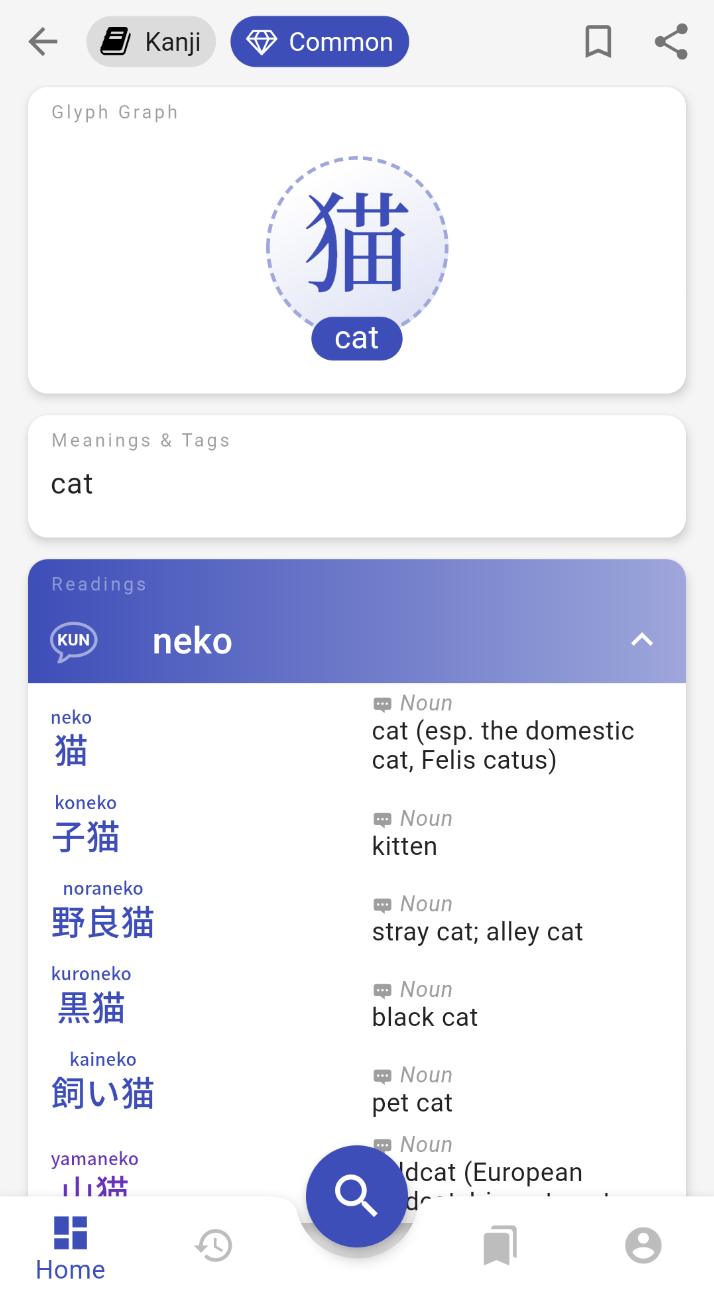
  • Readings: each possible reading of the kanji, sorted and colored by frequency of usage, lists all words that use this reading.

Japanese Collection​

The Japanese Words and Expressions Collection contains* 180,429 entries* with the following cards:

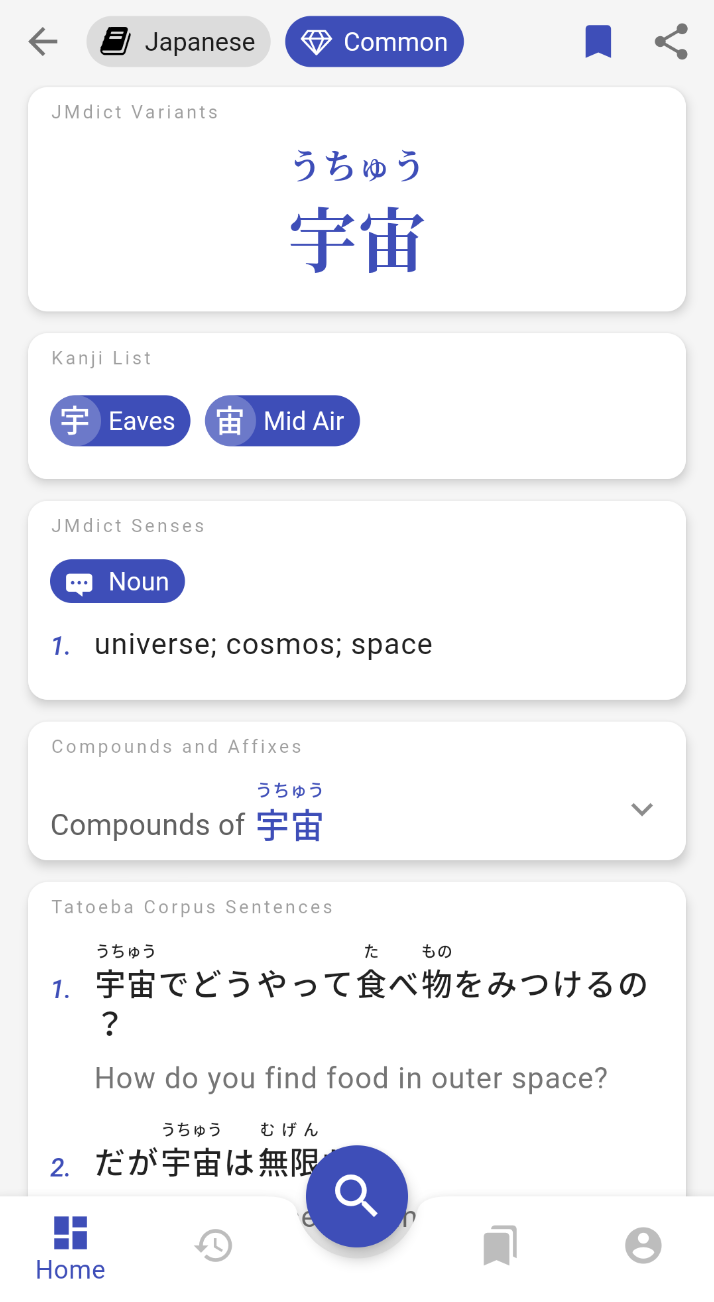
  • JMdict Variants: some Japanese words can be written with different kanji, kana or have different pronunciations, this card shows them all, courtesy of JMdict/Edict.
  • Kanji List: links to Kanji Collection pages for each kanji present in the word/expression.
  • JMdict Senses: list of definitions with tags that can also be used as search filters.
  • Compounds and Affixes: Japanese is an agglutinative language, words can often be part of other longer words.
  • Tatoeba Corpus Sentences: sample sentences with English translations from the Tateoba Corpus.

User Level and Preferences​

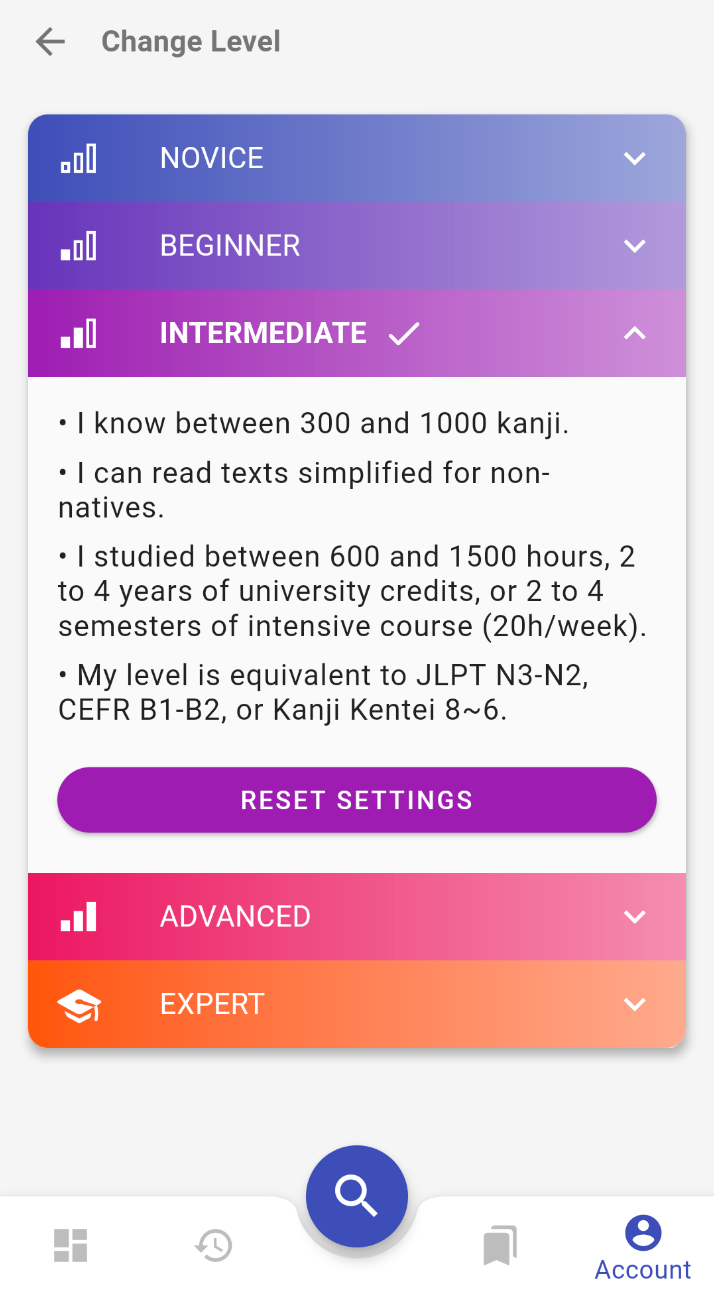
Kanjiverse comes with 5 recommended profiles based on the user's level. You choose the one that matches your level and the interface and content displayed will be adapted to fit your needs.

Things that change based on the selected profile: types of card displayed, tag details, furigana, romaji or kana, English or Japanese labels, hiding rare kanji/words, etc.

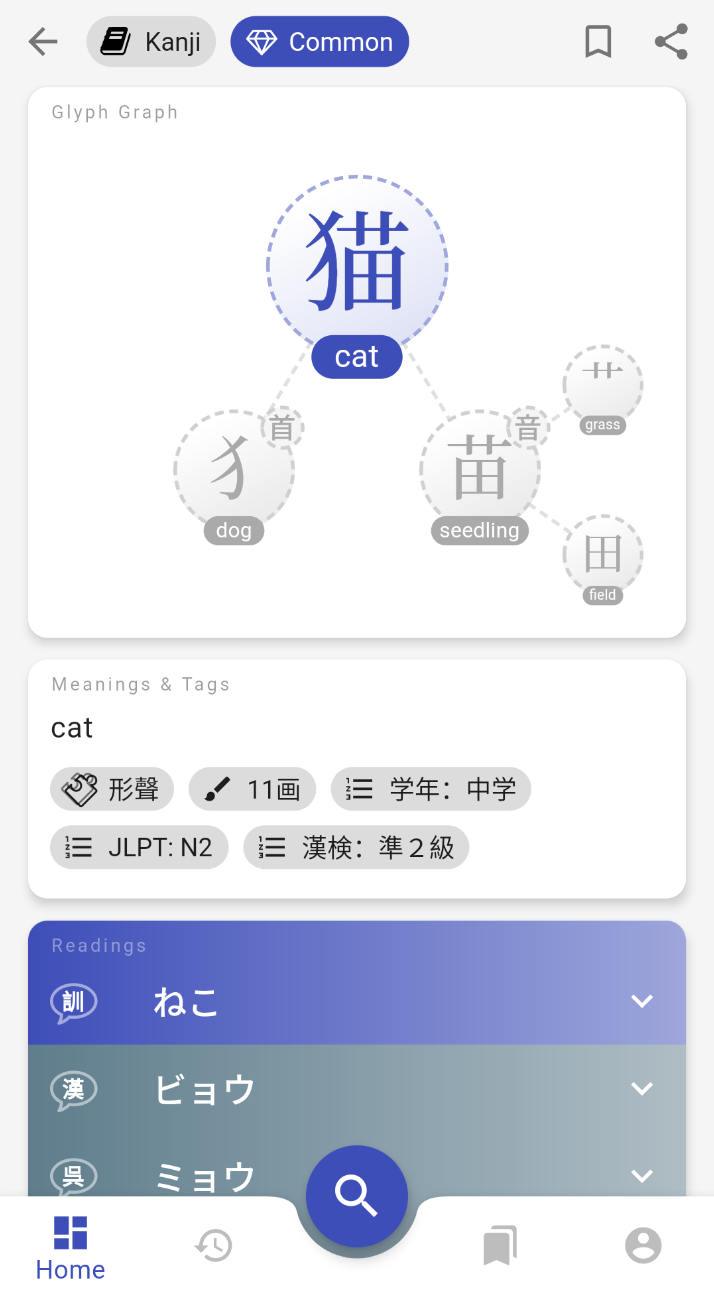
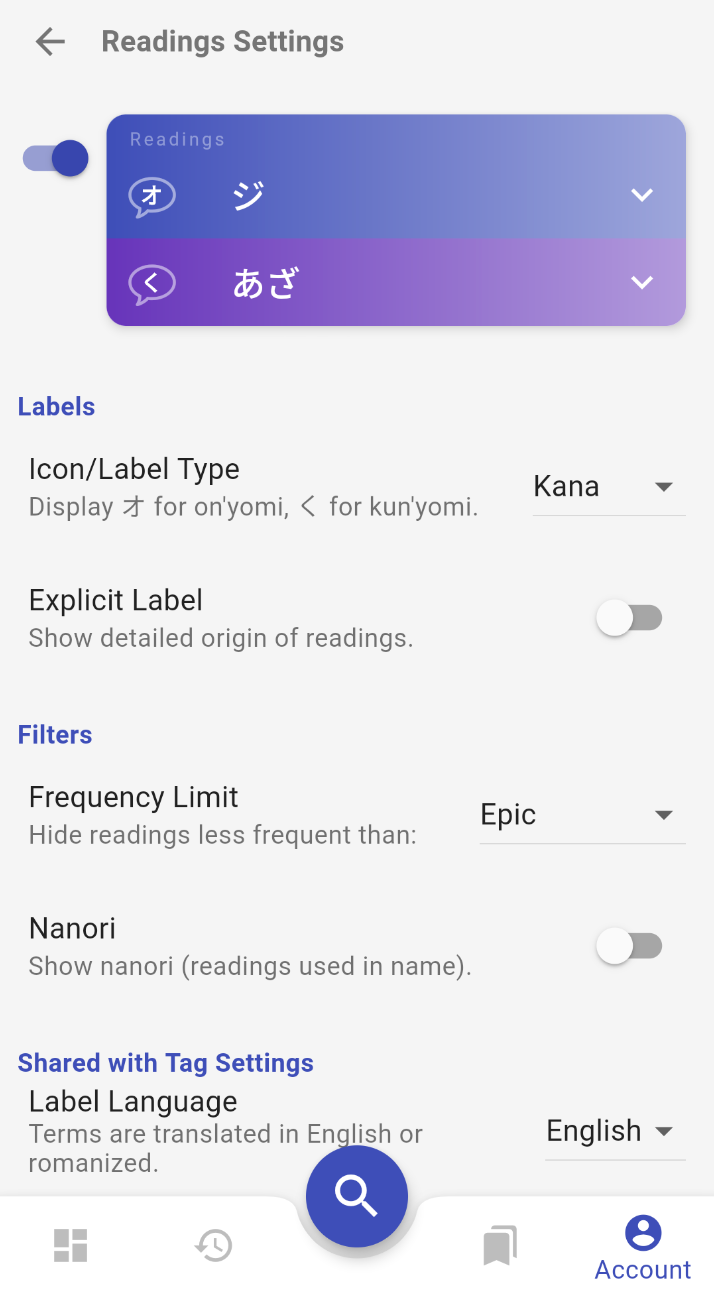
Example of the same page displayed for Novice, Intermediate, and Expert levels: The same page displayed for Novice, Intermediate, and Expert levels. All the settings used in these default profiles can also be fine tuned individually: Some of the Preference screens.

The search bar helps you query all collections at once with different input methods:

  • Keyboard Input: provides suggestions as you type, converts romaji to hiragana and autocompletes all filter tags.
  • Kanji Component Input: search by radical, phonetic component or any part of a character.
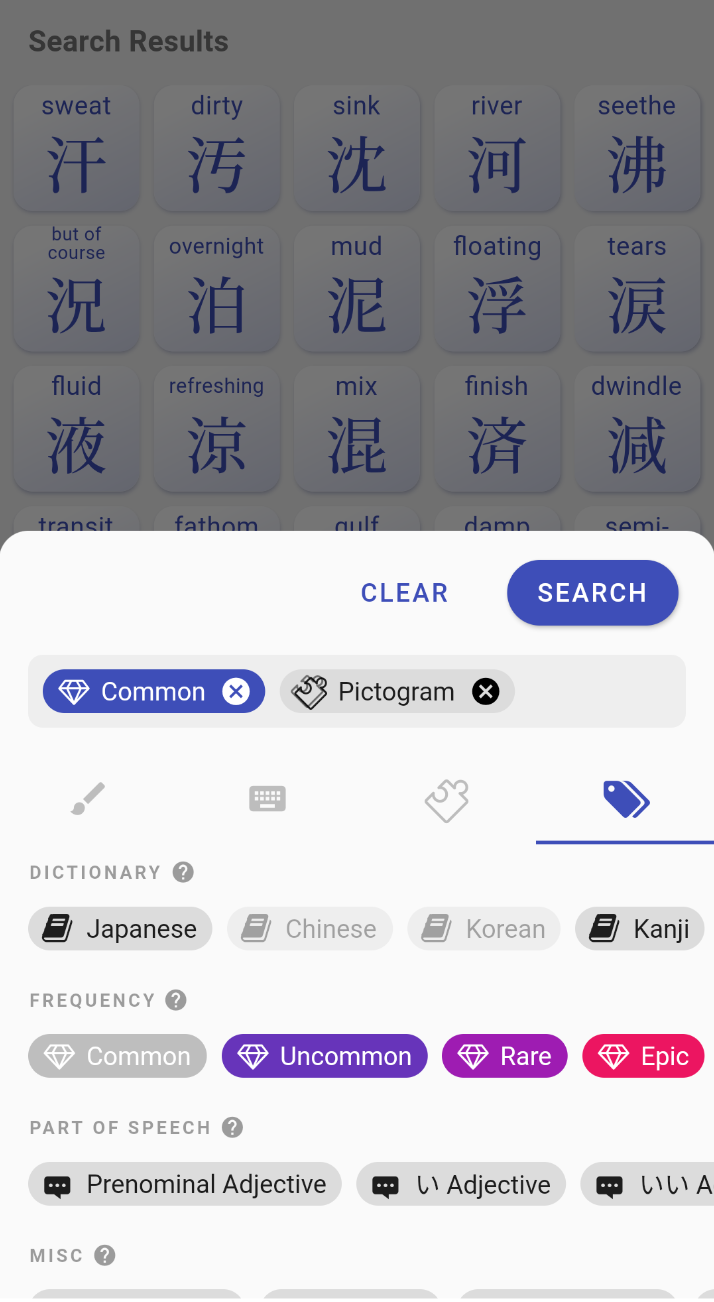
  • Filter Tag Input: every tag present on kanji/word pages can be used as filter. More than a hundred are available such as kanji composition, grammar element, frequency of usage, JLPT levels, etc. Search with different Input Methods.

Vocabulary Lists and Catalog​

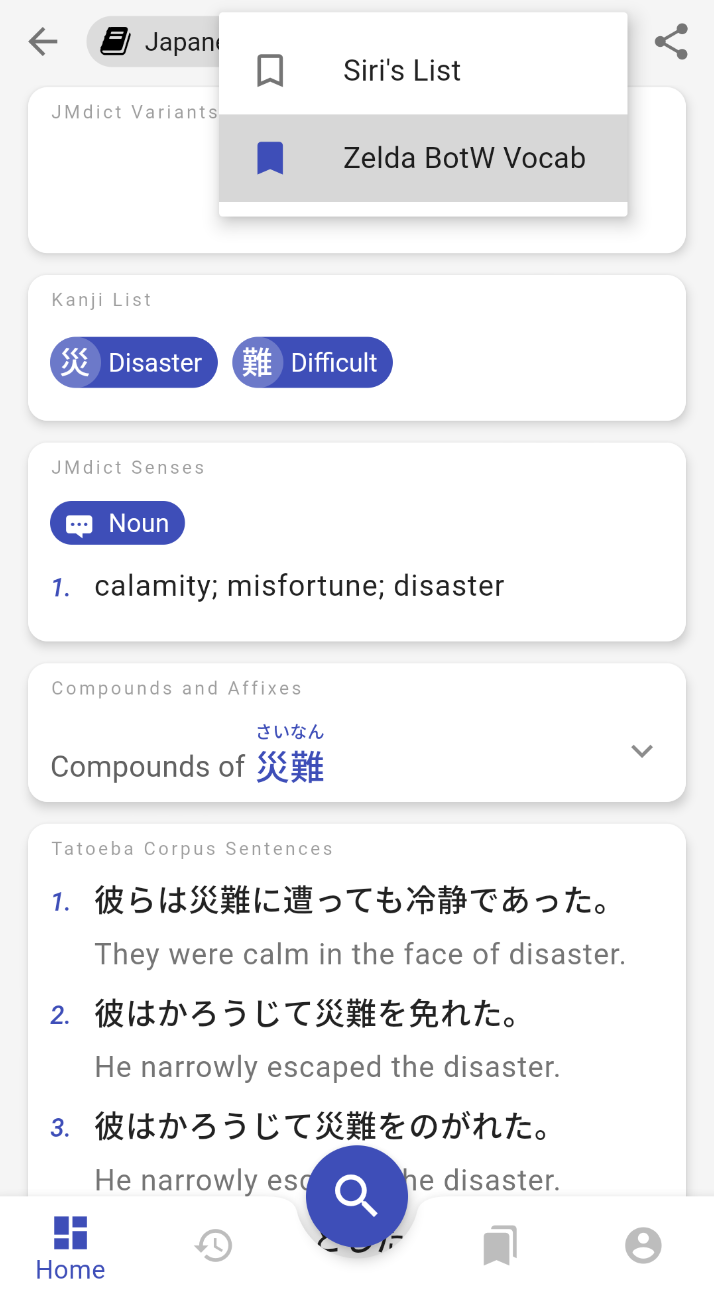
You can create your own lists of kanji/words and share them with others. You can also browse the catalog and bookmark any list that others have shared!

To create your own list:​

  1. Go to My Lists (tab in the bottom navigation).
  2. Sign In is required (only email sign in is available for now, careful not to forget your password, account reset isn't implemented yet!).
  3. Tap CREATE NEW LIST.
  4. Enter at least a title, description is optional, and check Share List if you want to let other users search and bookmark this list (of course they won't be able to modify its content).
  5. To add a kanji/words to this list, press the bookmark icon on any page, then select the list. Steps to create a custom list and bookmark pages.

To find shared lists:​

Instead of creating a list from scratch, you can search if someone has already shared a list for your textbook or favorite anime:

  1. Go to My Lists tab.
  2. Press the Search button (on this tab it is an icon of a magnifying glass hovering bookmarks).
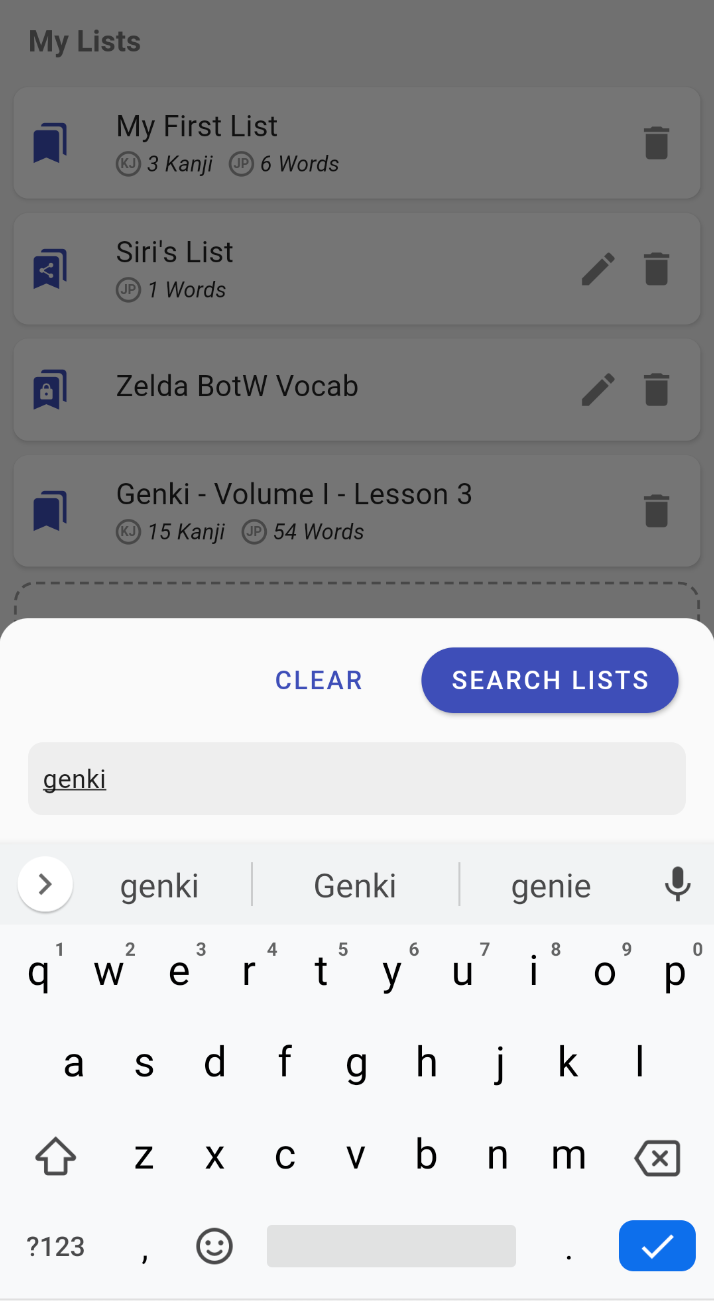
  3. Type the title you are looking for and press SEARCH.
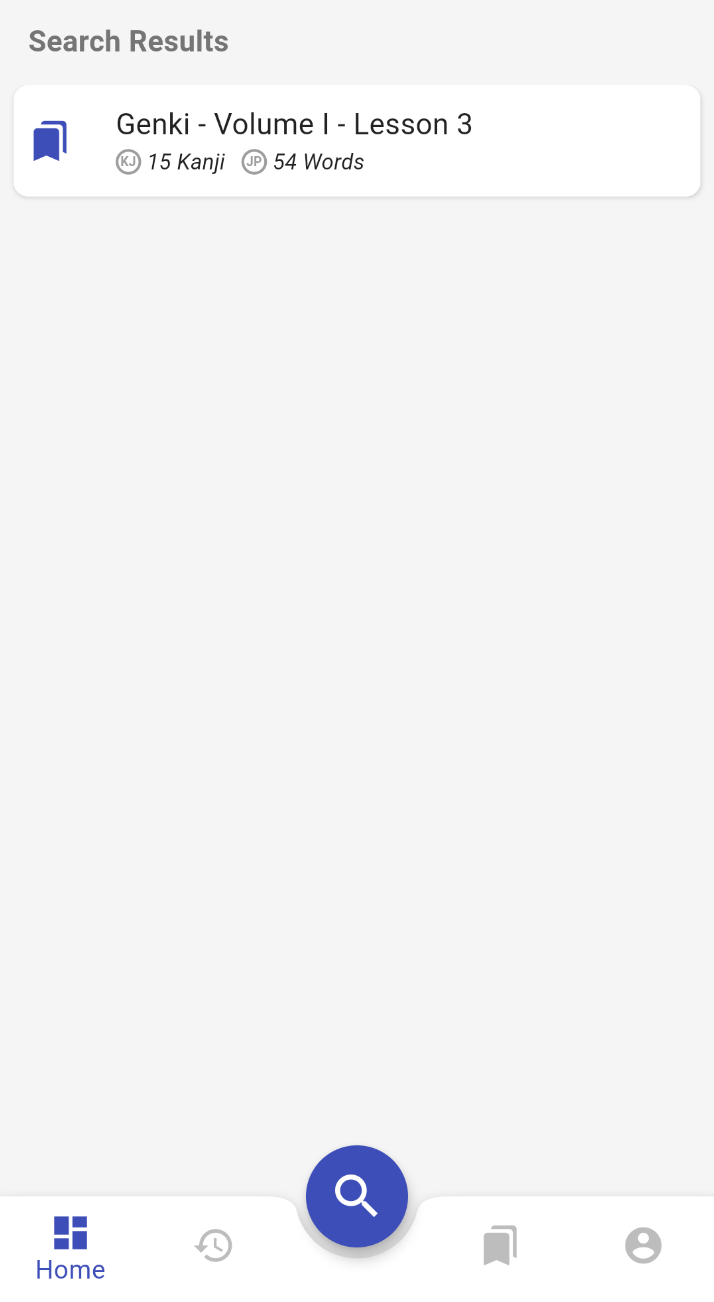
  4. Tap on one of the results to open the list's details.
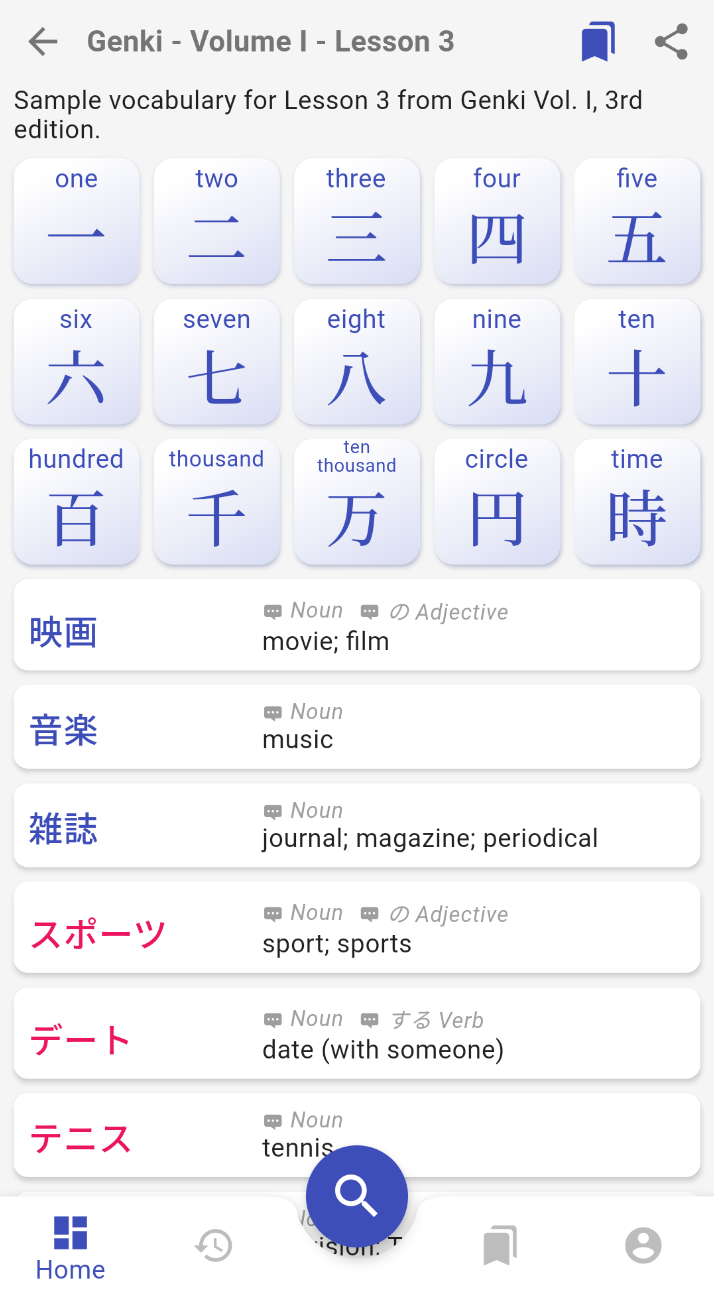
  5. Press the bookmarks icon to add it to My Lists. Steps to search the catalog of vocabulary lists.

Is that all?​

You might have noticed that not all features announced on the landing page are present in this first beta version, notably:

  • Kanjiverse Corpus (sentences from the real world extracted from anime, drama, etc.): development will continue when the app is stable, for now only Tatoeba Corpus is available.
  • Mnemonic Card: writing and sharing mnemonics to remember kanji will be added soon, meanwhile you can use the Formula Card to see Heisig's Remembering the Kanji (RTK) keywords for each component of a kanji.
  • Share translation and votes: community features are currently limited to creating and sharing vocabulary lists, there is no feature to add content, vote or report either.
  • Handwriting Input: the recommended workaround is to install Gboard.
  • Web app: the quality of the web version isn't good enough yet to provide a satisfying user experience so it will be delayed until it stabilizes.
  • **iPhone version: **the iOS version is ready to meet its beta testers, I am now at the mercy of Apple to allow its distribution... this might take weeks.

Don't be disappointed if a feature you were looking forward to isn't there yet, the development of Kanjiverse is far from over. In order not to delay the access to the private beta any further, I've decided to release a first version with only the features presented on this page. It should already provide beta testers with a usable experience. Further developments will then be prioritized based on the feedback from the community.

If you haven't register yet, go there and enter your email address to receive your invite link. Looking forward to seeing you in the private beta :)

Japanese Learners' Study Habits Survey Results

· 9 min read
Kanjiverse
Kanjiverse

This article presents the results and analysis of a survey on Japanese learning habits. The 598 respondents have learned Japanese (23) or are still learning (575).

Disclaimer​

A majority of the respondents came from Reddit so the demographic of this survey exhibits a bias toward the demographic of Reddit in general. This might not be an accurate depiction of the broader population of Japanese learners but still gives us some insights into a population of English speakers using apps and online tools to study Japanese.

Demographics​

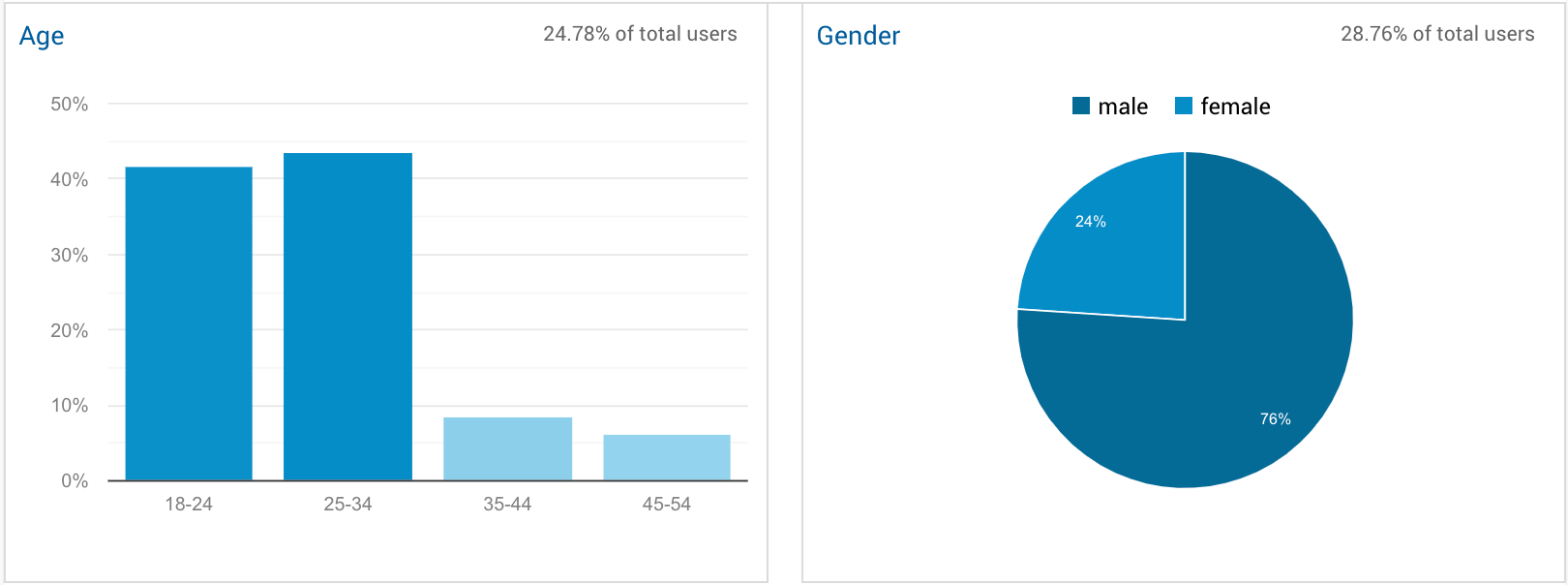
The age and gender demographic statistics were anonymously collected with Google Analytics from a sample (between 25% and 29%) of the visitors to the site, disregarding whether they took the survey or not. The language and country were inferred from their browser's settings and might not reflect the mother language of the visitor.

The average visitor is a male (76%), between 18 and 34 years old (82%), whose most common native language is English (75.8%) followed by Japanese (5.4% this could be due to visitors using a computer in Japanese, for instance at school), French (4.4%), German (3.9%), Spanish (2.6%), Portuguese (2%) and other languages (5.9%). People are broadly spread geographically, with 37% from North America, 31% from Europe, 18% from East and Southeast Asia, 6% from South America, 4% from Southern and Western Asia, and 3% from Australia.
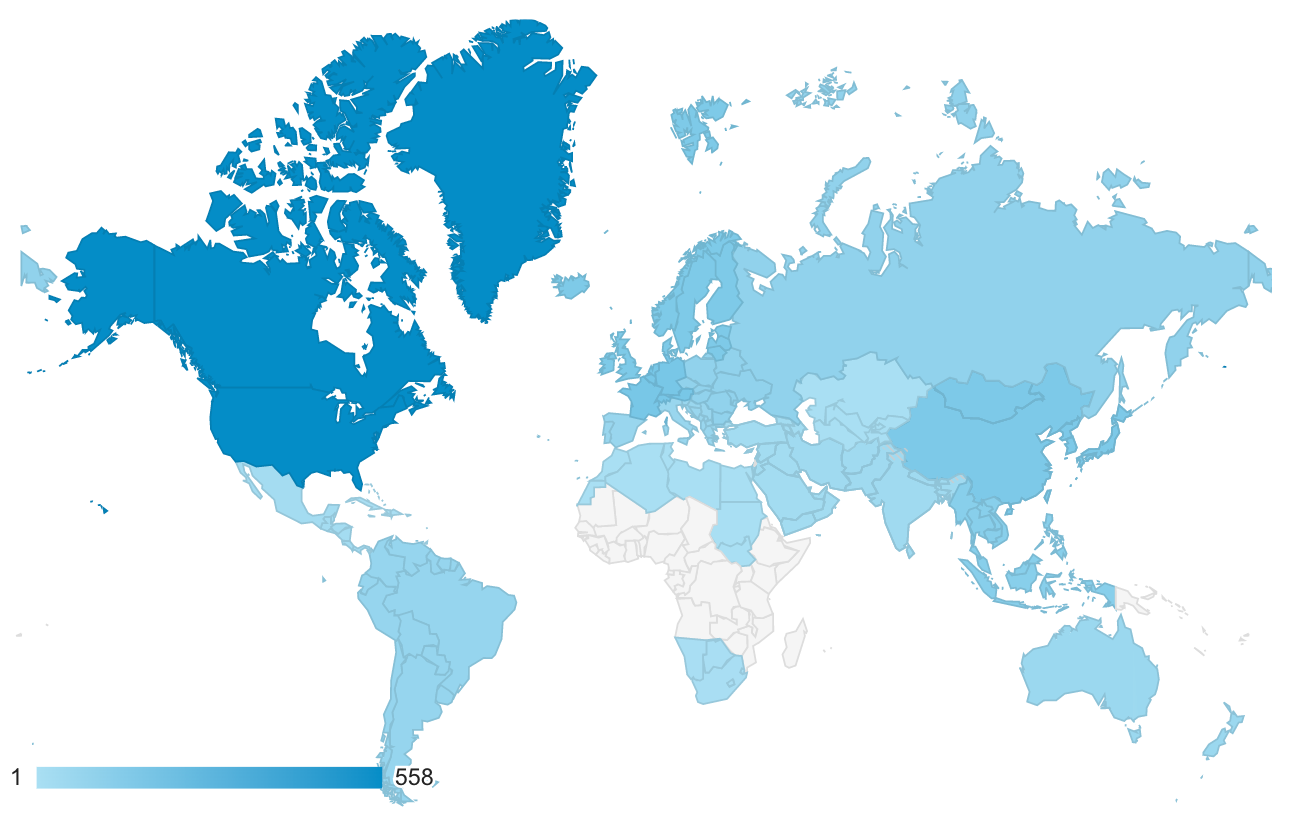
9% of visitors were in Japan while 6% of the survey respondents said they were currently living in Japan.

Relation Between Years of Studies and JLPT Level​

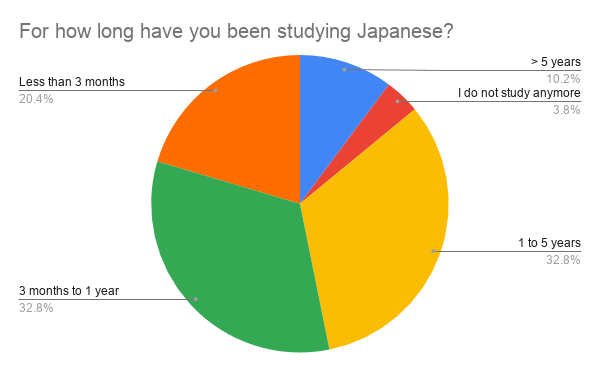
The majority of learners (53.2%) have less than one year of study, with a 5th of respondents just getting started. 10.2% have been studying for more than 5 years. JLPT level or equivalent by number of years studying The cross-reference shows a correlation between JLPT level (or equivalent) and the number of years studying. Only 23.5% of beginners (less than a year studying) took or can compare their level to the test. This number increases as the time passes, 52% of intermediate to advanced learners took the test (or estimated their level), and a whopping 75.4% of long term learners (> 5 years).
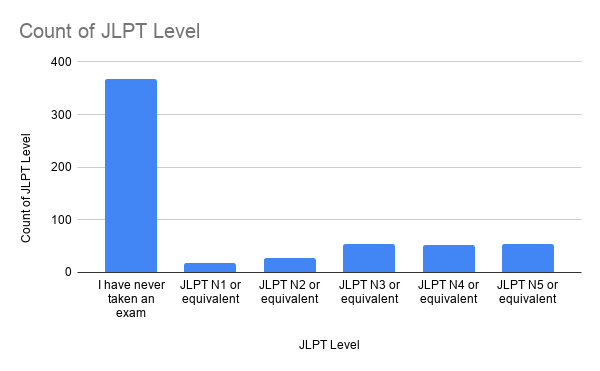
The number for absolute beginners (less than 3 months) seems unreliable. Considering many answered to have a level equivalent to JLPT N1 (the hardest level), it seems they have wrongly assumed it was the easiest level. 7.4% estimate to have reached a level equivalent to N5 in less than 3 months which seems plausible if they took one term of intensive class (15~20 hours/week).

The majority of learners who studied for less than a year can still be considered beginners or lower intermediate with an equivalent level of N5 for 14.3% and N4 for 6.1%. Only 1.5% estimate to have attained an intermediate level (N3 equivalent) in less than a year.

Half the students between 1 to 5 years of studies self-reported as beginners (7.1%), lower intermediate (18.4%), intermediate (17.9%), and upper-intermediate (7.7%).

Only after more than 5 years of studies does the number of advanced learners reach a significant 19.7% (JLPT N1 or equivalent), while the majority still consider themselves intermediate (6.6% lower, 26.2% intermediate, 18% upper) and only a few remaining at a beginner level (4.9%).

Higher Level For Course Takers​

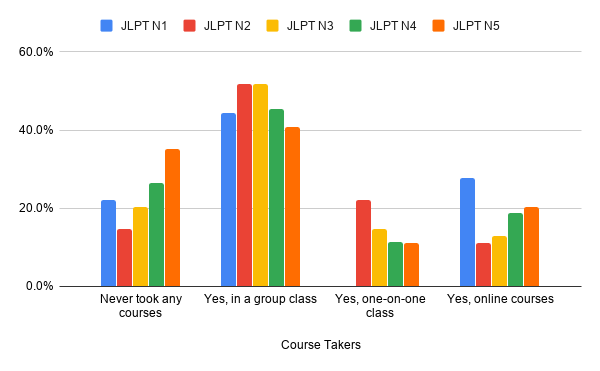
Never took a courseTook a course (group class, 1-on-1 or online) Those numbers are much higher for respondents who are taking classes compared to those who aren't, especially for JLPT N4 and N5.

For the respondents who studied less than 3 months, those who took a course were 4 times more likely to reach a level equivalent to JLPT N5 compared to those who never took a class (17.2% vs 4.3%).

Likewise, 3 times more people reached JLPT N5 in less than a year after taking a class (25% vs 8.5%). The same observation for JLPT N4 with 13.2% of course takers compared to only 3.1% who never took a course. The number is even more staggering for JLPT N3 students, only those who took a class could reach that level (4.4%) in less than a year.

This trend is still observable after a year of studies, 9.6% of course takers attained JLPT N2 against 3.8% who didn't take a class. The only exception to that trend is for JLPT N1, a few more people reached that level without taking any course. This discrepancy might be due to the low number of samples in this category. About half of the respondents who passed any level of JLPT have had taken a group class. The higher the level, the more likely the student took a group class. Students at lower levels are more likely to have taken online courses instead.
Study Frequency and Location​

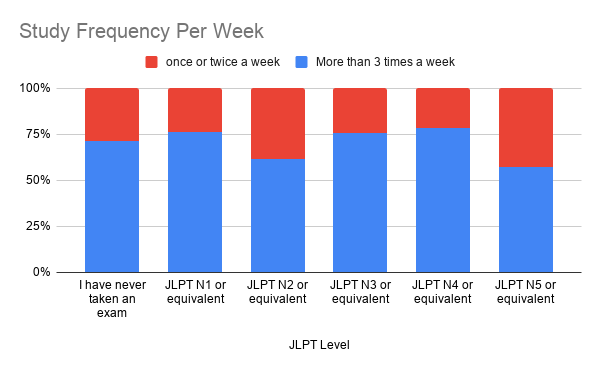
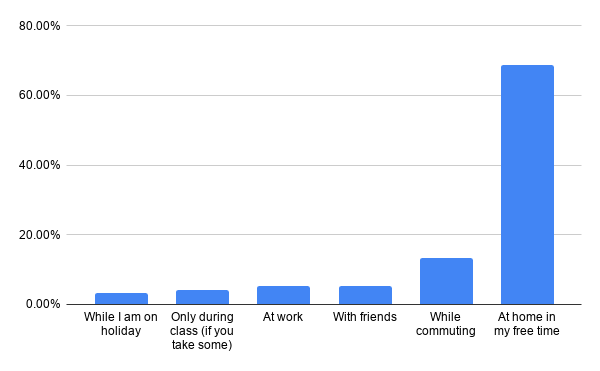
About 2/3 of the respondents are studying more than 3 times per week, this seems consistent across all levels except for beginners. The overwhelming majority of respondents are studying at home (68%), followed by commuters (13.4%).
Motivations to Learn Japanese​

80.6% of the respondents are learning Japanese because they love the Japanese culture. The interest in pop culture is predominant, with 73.7% of the respondents showing interest in at least manga, anime, movies, drama, TV shows, video games, or Jpop.
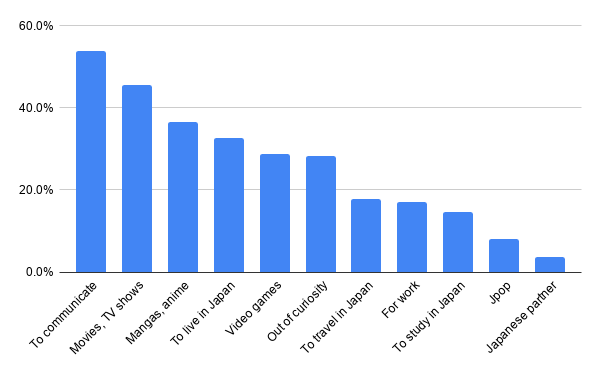
The second major reason seems to be a practical one for 61.9% of respondents: to live (32.6%), travel (17.9%), work (17%) or study (14.7%) in Japan. Note that the "for work" answers do not discriminate between those working in Japan or outside, but even if we remove them, the number of people who want to learn Japanese to visit or live Japan is still 54.7%.

The will to communicate with Japanese people comes in third position (53.8%).

There is also 28.3% learning out of curiosity, driven by an interest in the Japanese culture or the language. As for what keeps them motivated, the number one reason (59.4%) is in line with the reason to start learning: enjoying pop culture (manga, drama, etc.). And so is the ability to communicate with Japanese people (46.2%).
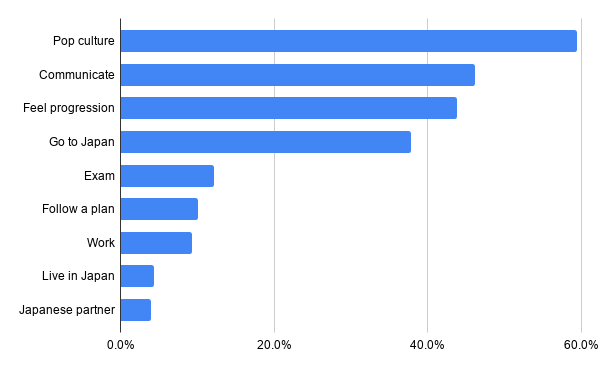
43.8% of the respondents said that the feeling of making progress keeps them motivated. The fourth major motivator (37.8%) is a plan to go to Japan.

Less respondents are motivated by necessity rather than pleasure: study/exam (22.%) and work (9.4%).

The reason at the bottom of the ranking is quite surprising. Despite 32.6% living or wanting to live in Japan, this only motivates 4% to keep studying.

Kanji Learning​

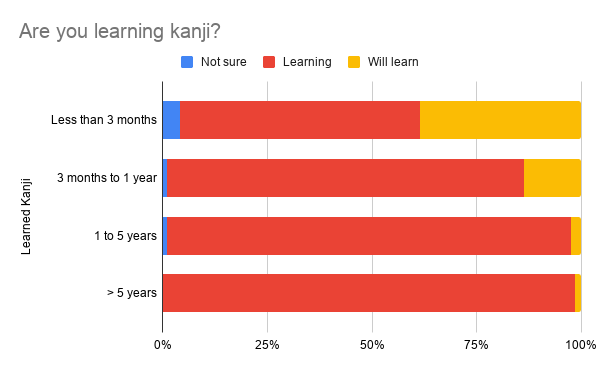
57.4% of learners are already studying kanji during their first 3 months, 85.2% after 3 months, and 96.4% after the first year.
Study Tools​

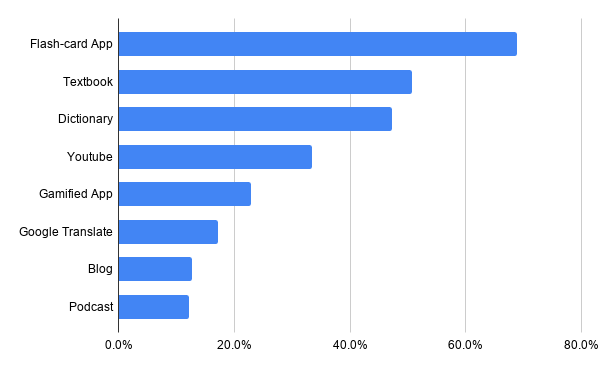
By far, the most popular study tools are flash-card apps (Wanikani is also include in this category) with 68.9% of respondents using them, far more popular than other gamified apps (such as Duolingo) only used by 22.9%.

Traditional textbooks are used by 50.7%, slightly less than all formats of online lessons combined (youtube videos, blog articles, podcasts) that are used by 58.4%.
Translation Tools​

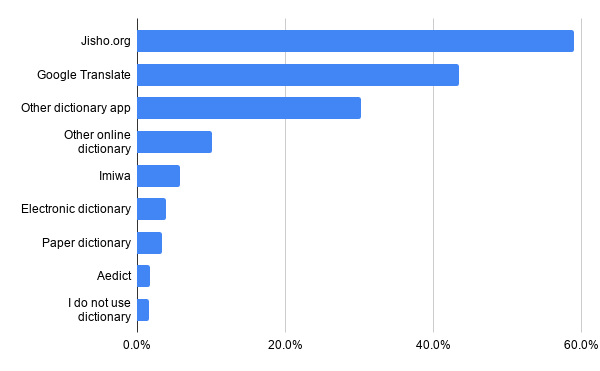
The majority of respondents (76.6%) use a dictionary (any format) to search the translation of a word. 17.6% exclusively use Google Translate for that usage, while only 1% use neither.

Among dictionary users, online dictionaries are the most popular (82.5%), especially jisho.org with 85% of users.

The second most used kind is the dictionary app (47.1%), followed by electronic dictionary (5.1%), then paper dictionary (4.3%).
Kanji Input Methods​

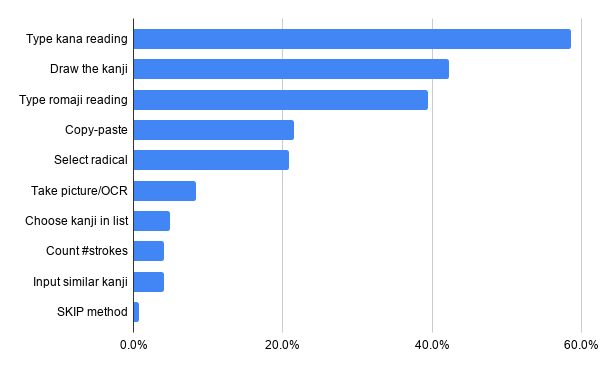
By far, the most used kanji input method is searching by reading (83%) either in kana (58.6%) or romaji (39.4%). Which is also the standard method for natives.

The second most used input method is drawing the kanji, for 42.3% of respondents. Useful when the reading is unknown or forgotten. An alternative to drawing is selecting the radical or components from a list (20.8%).

Other methods are used when the kanji can't be drawn or read, mostly by copy-pasting it from another website (21.5%) or a list (4.8%), using an OCR (8.4%), or looking up a similar kanji one already knows (4.1%).

Traditional dictionary lookup methods such as stroke counts (4.1%) or SKIP method (0.7%) seems rarely used, except by paper and electronic dictionary users.

Conclusion​

This studies has shown that Japanese learners are mainly studying for pleasure rather than for a career. The main motivation to study the language is to enjoy pop culture (manga, games, TV shows, etc.), a plan to go to Japan, and communicate with Japanese people. Few are doing it for work. Pop culture is still the main reason that keeps people motivated. Despite a third of the respondents wanting to live in Japan as a reason to start learning, very few said that it is what kept them motivated in the end.

The majority are self-learners, combining flash-card apps and online resources, studying at home or during their commute, at least 3 times per week. Despite that, the study reveals a clear advantage to those taking a course, and especially in a group class. They are 3 to 4 times more likely to attain a level equivalent to JLPT N5 to N3 in the same amount of time than those not attending classes. This number might be biased though, due to the school encouraging students to take the JLPT exam, or at least giving them a better understanding of their actual level.
Welcome to the 'verse

· 2 min read
Kanjiverse
Kanjiverse

In the past couple of weeks, I've been quite busy working on the site and setting up the infrastructure for the beta. I'll resume the development in the coming days and expect a private beta to launch somewhere in September.

Meanwhile, I've published a tentative Roadmap to give you some insights about what's coming next. As you can see, it's split into 4 phases, each focusing on a different aspect of the ecosystem. That doesn't mean the development will necessarily be sequential. Some phases might overlap or be re-prioritized, depending on the feedback received.

During Phase 1 and 2, this blog will mostly be used to post announcements and present new features. Once the app is released, I intend to publish broader content about language learning and East Asian languages in particular.

In Phase 3, I plan to introduce tools to allow bloggers and teachers to write lessons that integrate with the Kanjiverse ecosystem. If you are interested in contributing or guest posting, please contact me.

And if you haven't already, don't forget to join the beta. I hope to see you there ;)