Search and Results
The search sheet is opened from the round Search button at the center of the bottom navigation bar. Below the search bar, a row of buttons switches between the available input methods: Radicals, Tags, Keyboard, Handwriting, and Speech.

Search as you type
As you type, suggestions update in real time. Type in romaji and Kanjiverse will offer to convert your query to hiragana; from there you can search words that start with or contain the reading, jump straight to a matching word, or search kanji readings.


Each suggestion carries an icon: a search icon submits that suggestion directly, a plus icon adds it to the search bar, and a bookmark icon opens the corresponding page right away.
Paste from Clipboard
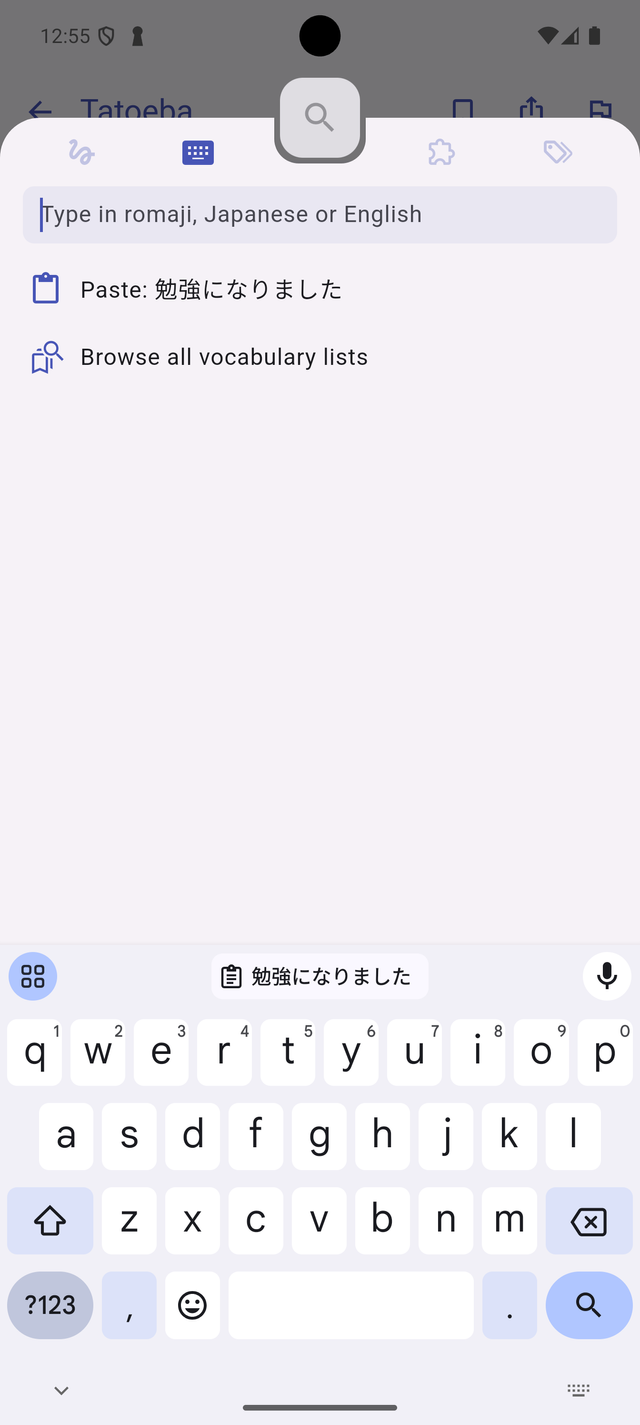
You can look up an entire sentence using Kanjiverse. Simply copy a phrase, and the option to paste from clipboard will appear in the search suggestions.
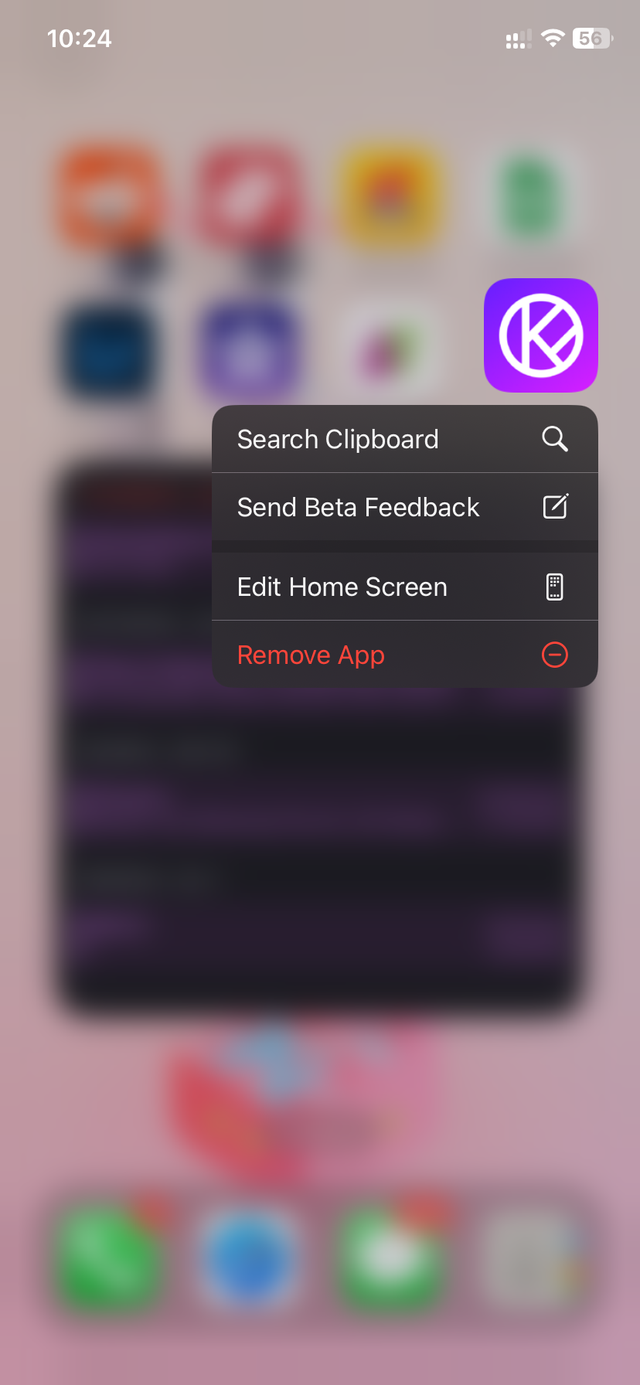
iOS users can also directly paste the clipboard from their homescreen. Simply long press the Kanjiverse app icon, and the option to paste from clipboard will appear.
Search with Handwriting
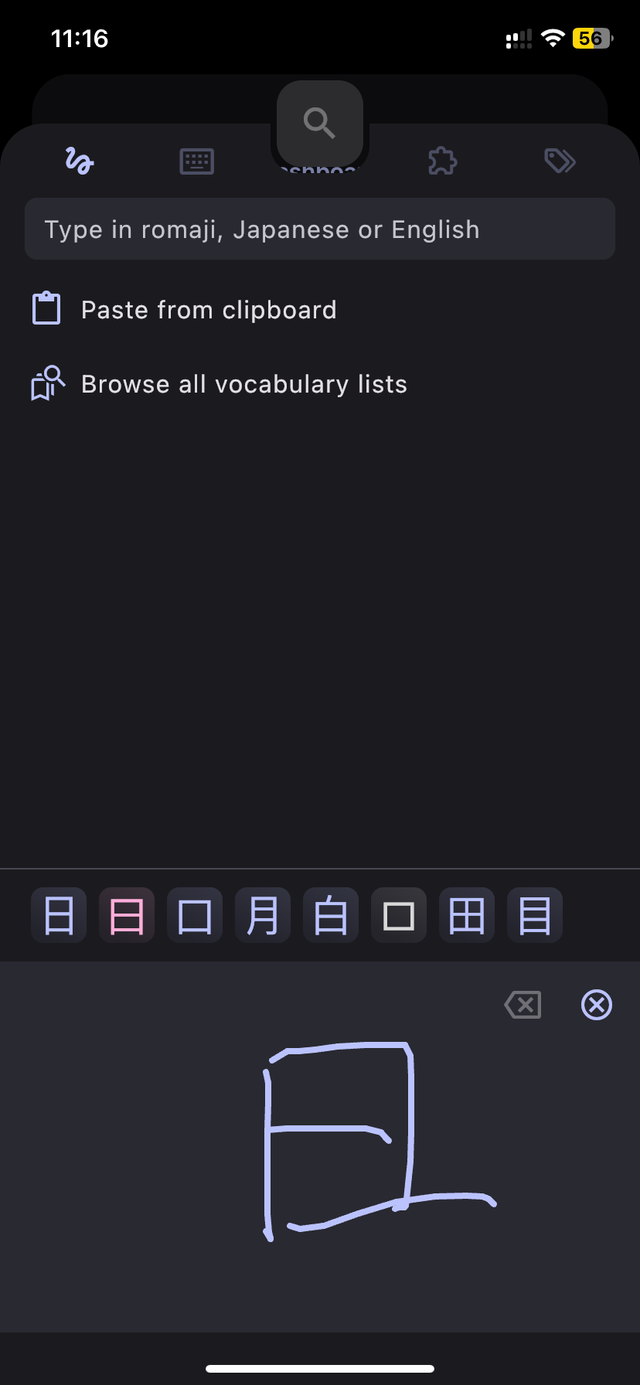
Tap the hand icon in the row of buttons under the search bar to bring up Kanjiverse's handwriting recognizer. Draw a character on the pad and candidate kanji appear above it in real time. The first time you use it, you will be asked to download the recognition model (a few MB).
Search with Speech
Tap the microphone icon in the row of buttons under the search bar and say a word or a phrase: the recognized text is inserted into the search bar and turned into suggestions. The speech recognizer uses your device's speech recognition service (Google on Android).
Search an Image
The camera and gallery icons at the top of the search sheet let you scan a picture (a page of a book, a manga panel, a screenshot...) with the on-device text recognizer. Detected Japanese text can then be looked up or analyzed as a sentence.
Search with Tags
Each kanji is categorized using tags; you can see them on the "Meanings & Tags" card.
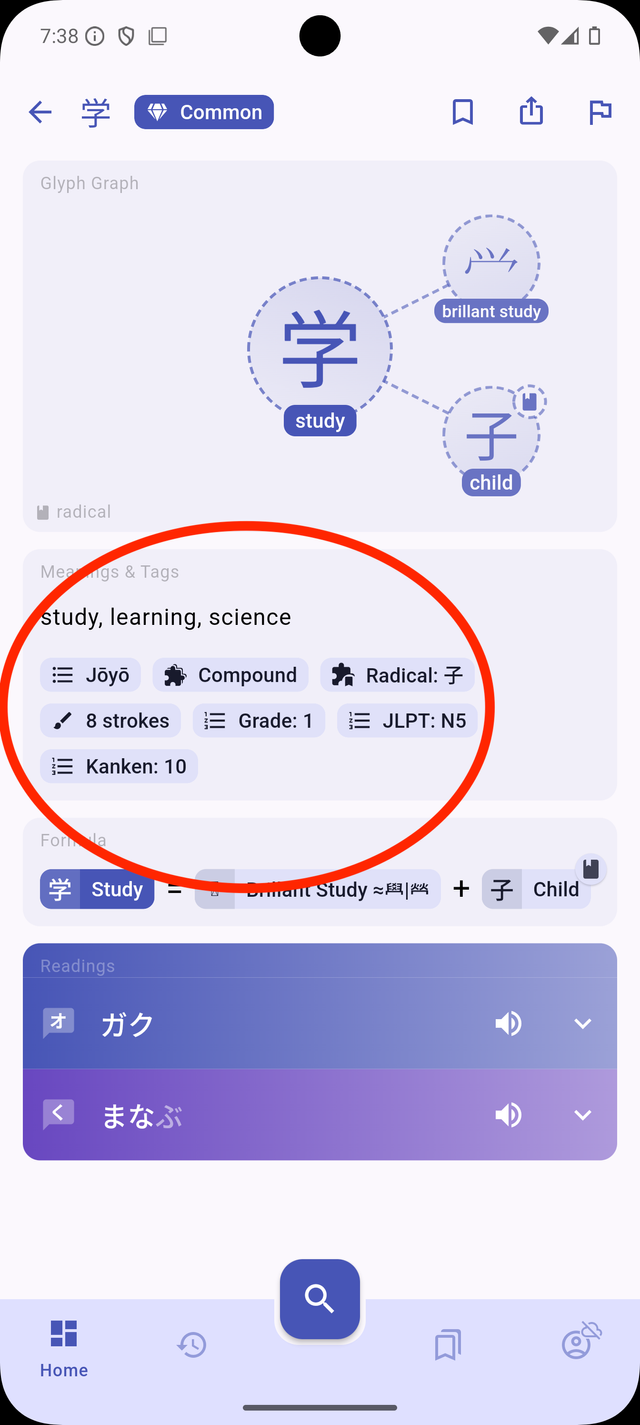

Utilize the tag features to narrow results by selecting specific criteria like language, user level, word frequency, part of speech, and more, ensuring a more targeted and relevant outcome.
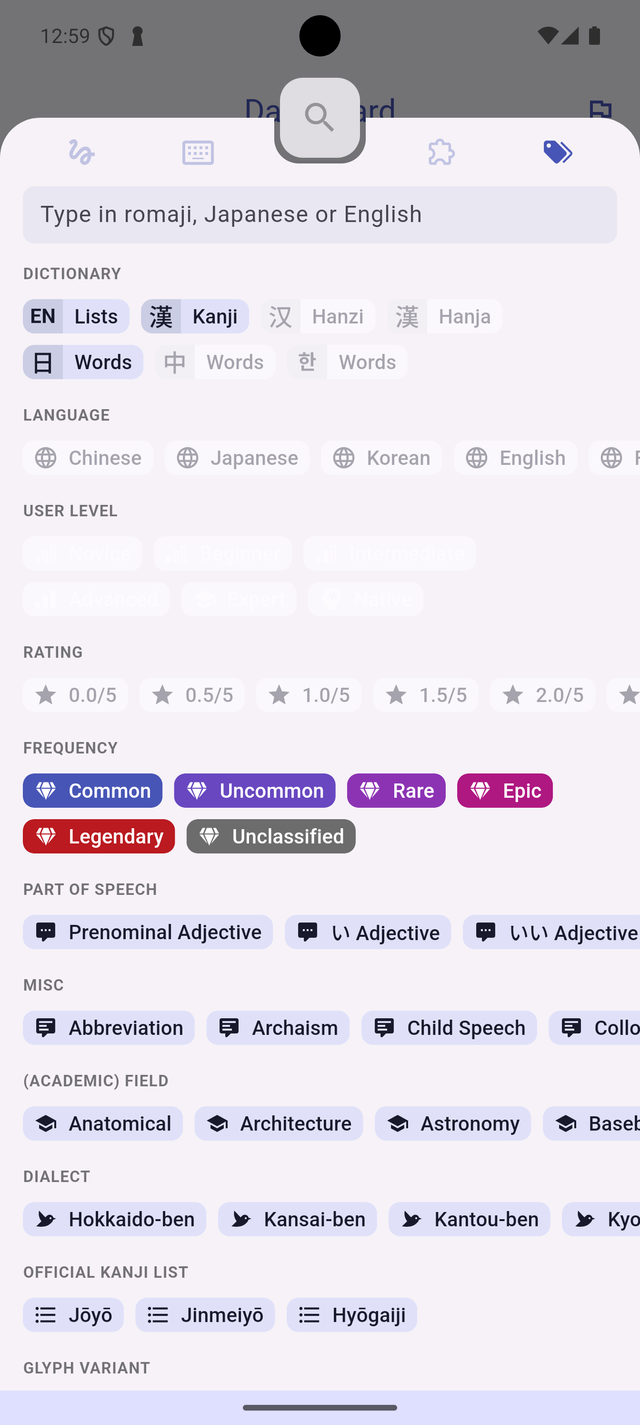
You can also pick tags from the dedicated tag tab: tap the tag icon in the row of buttons under the search bar and browse all available dictionary tags.


Feel free to add as many tags as you want (as the Japanese permits...)
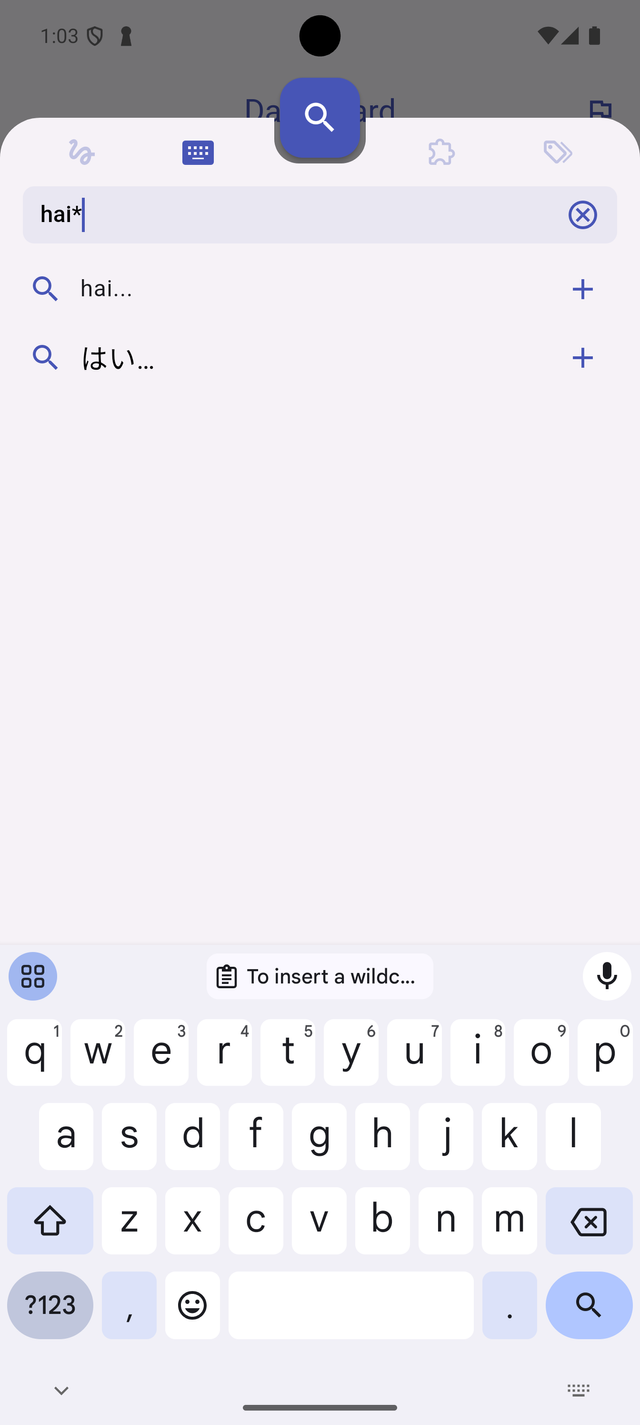
Search with Wildcards
To insert a wildcard into a search term, include an asterisk (*) to match any series of characters, or a question mark (?) to match a single character. For example, entering hai* will retrieve all entries that start with "hai", helping you find related words or kanji efficiently.


Search with Radicals
Searching by radicals or components is a powerful method to explore and identify complex kanji in just a few taps.
- Tap on the puzzle icon in the row of buttons under the search bar.
- You will see a grid of radicals. These are the building blocks of kanji characters.
- Tap radicals to add them to your search: the suggestion row narrows down to the kanji containing all the selected radicals.
In just a few taps you can search complex kanji. Here you can see that in just 4 taps you can search the character 付


Let's do another example, building on the example we had earlier.


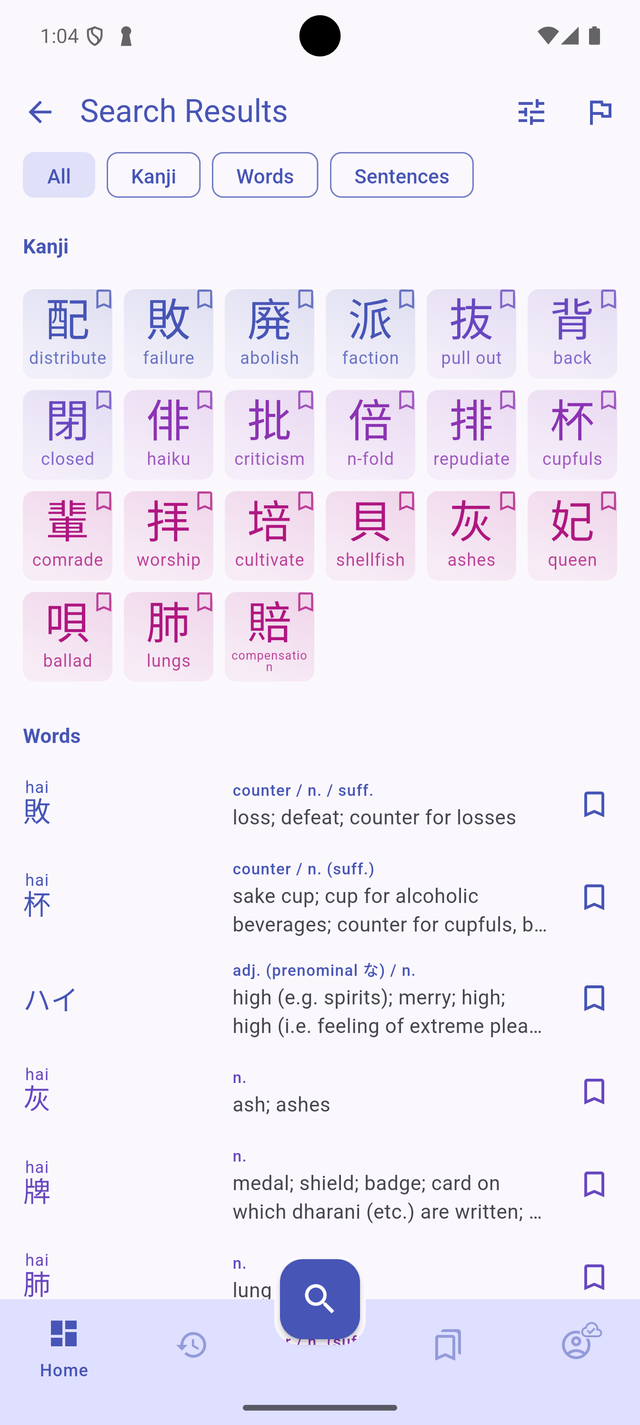
Search Results
Results are grouped by collection — Kanji, Words, Lists, and Sentences — with chips at the top to filter the view. Tap any result to open its page.


Sorting Your Search
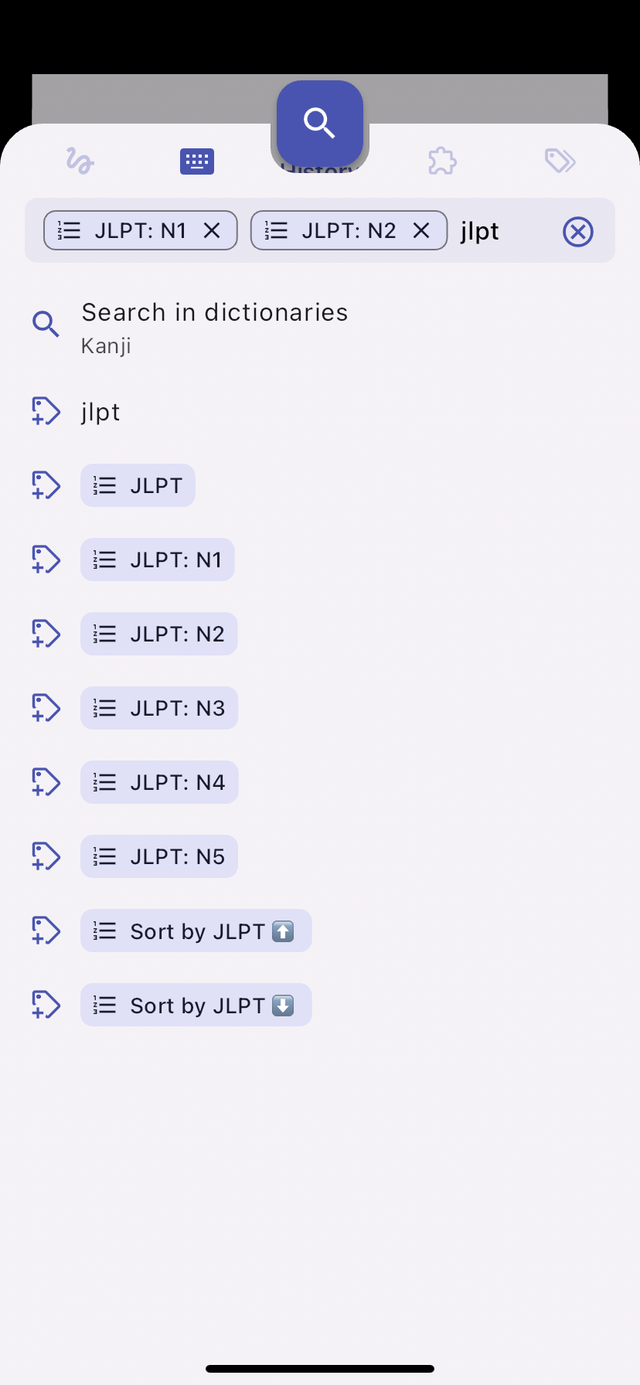
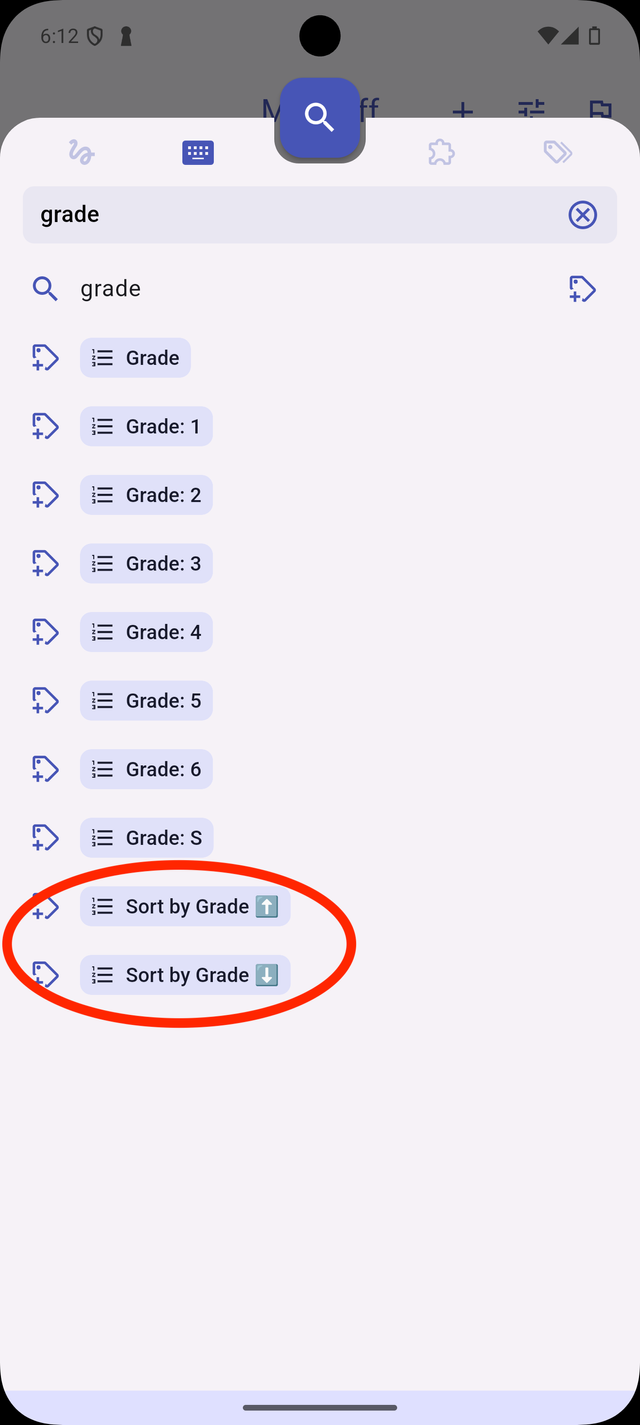
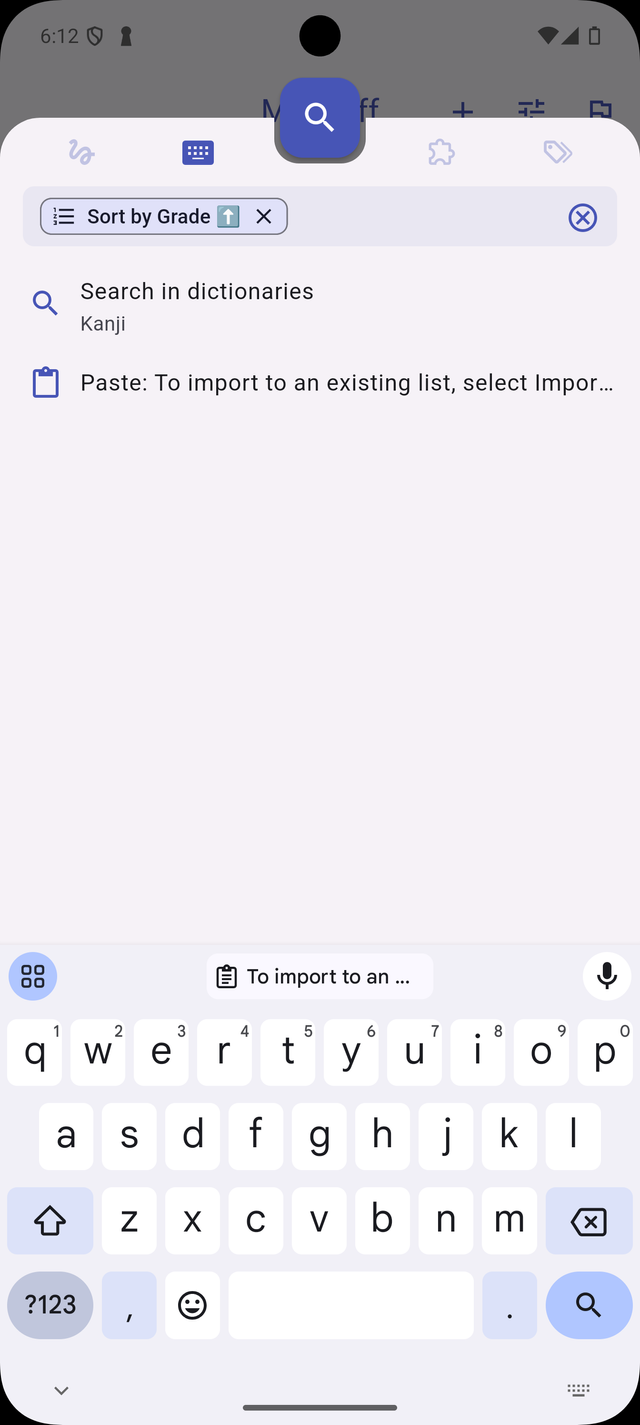
You can also sort your search results based on certain criteria; the trick is to add the criterion as another tag.
- Type in your criteria (jlpt, grade, frequency, strokes, etc.)
- Choose "Sort by..." either ascending or descending
Bookmarked and Shared Filters
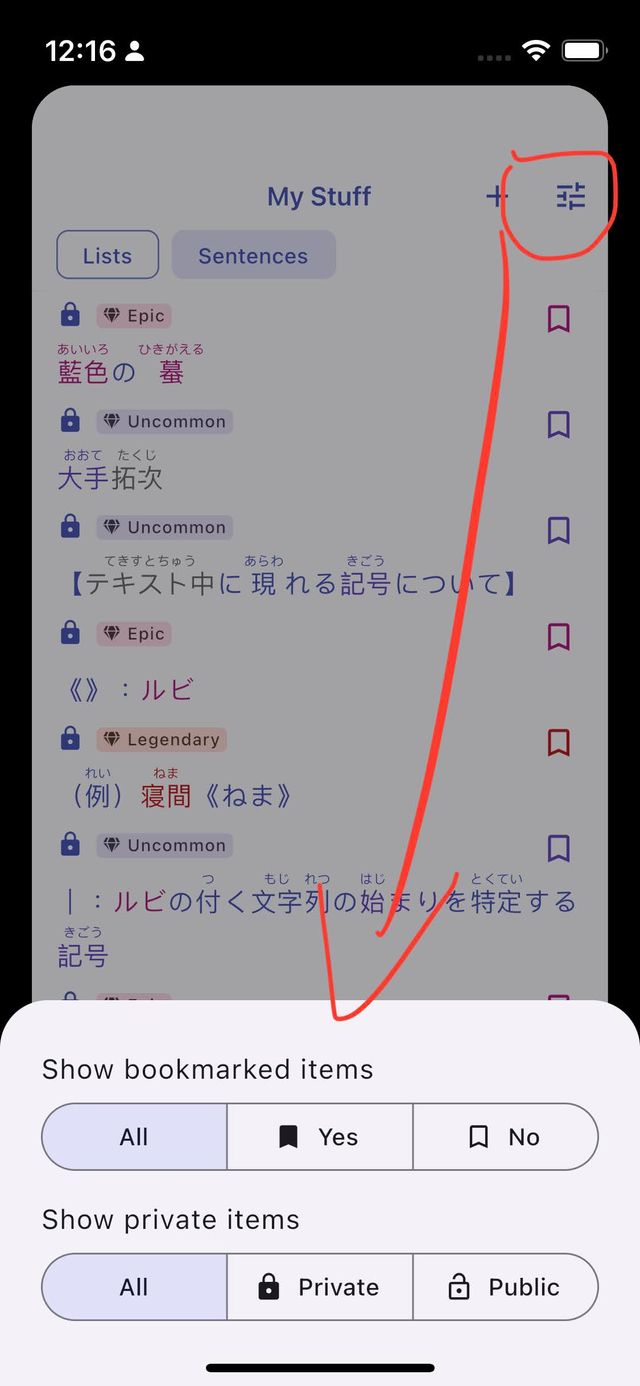
Want to only see words you haven't bookmarked yet? Or only show your shared sentences? You can now do that with the filter button located in the app bar of History, My Stuff, and Search Results. Two filters are available for now:
- filter bookmarked items: show only bookmarked, non-bookmarked, or all
- filter private items: show private, public, or all