Sentences Dictionary
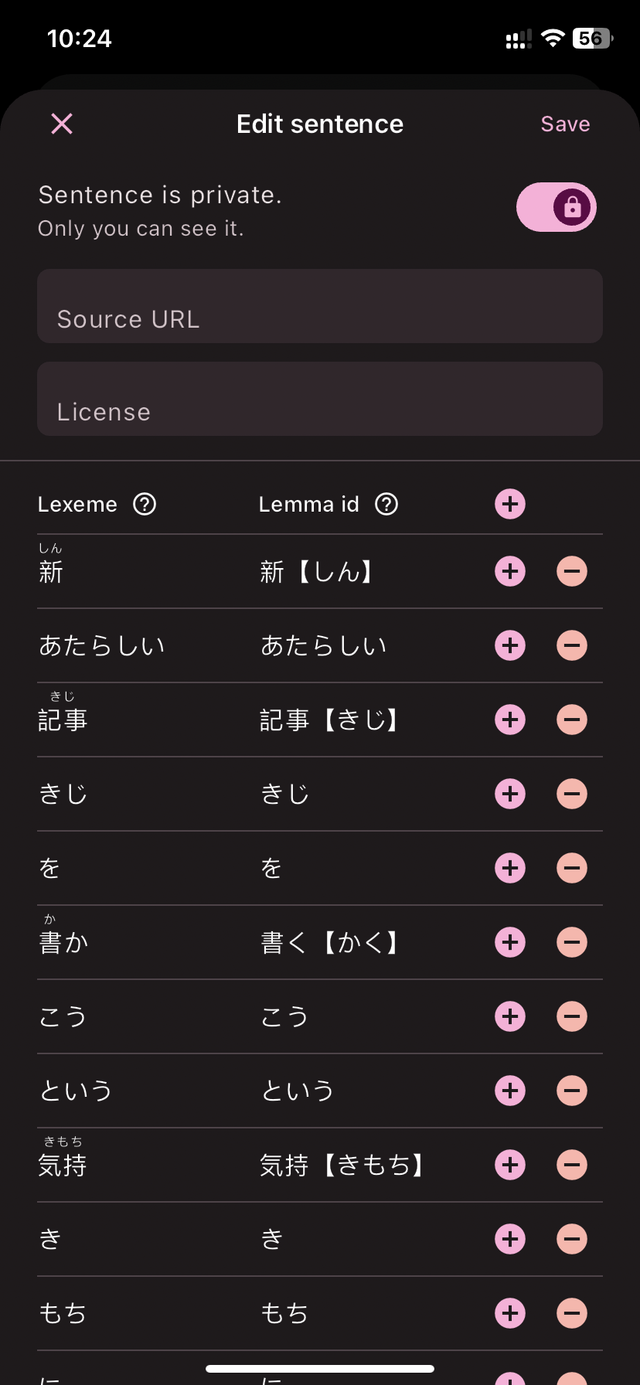
A sentence page shows the type of the sentence in the app bar (Tatoeba, user sentence, or AI-generated), the Japanese sentence with furigana and color-coded words, its difficulty rating and quality, and cards with the translations and the list of words in the sentence.


Sentence Cards
To show or hide different cards in your Sentences Dictionary, go to Settings -> Sentence Cards. Simply toggle the visibility switch to show or hide any of the feature cards.
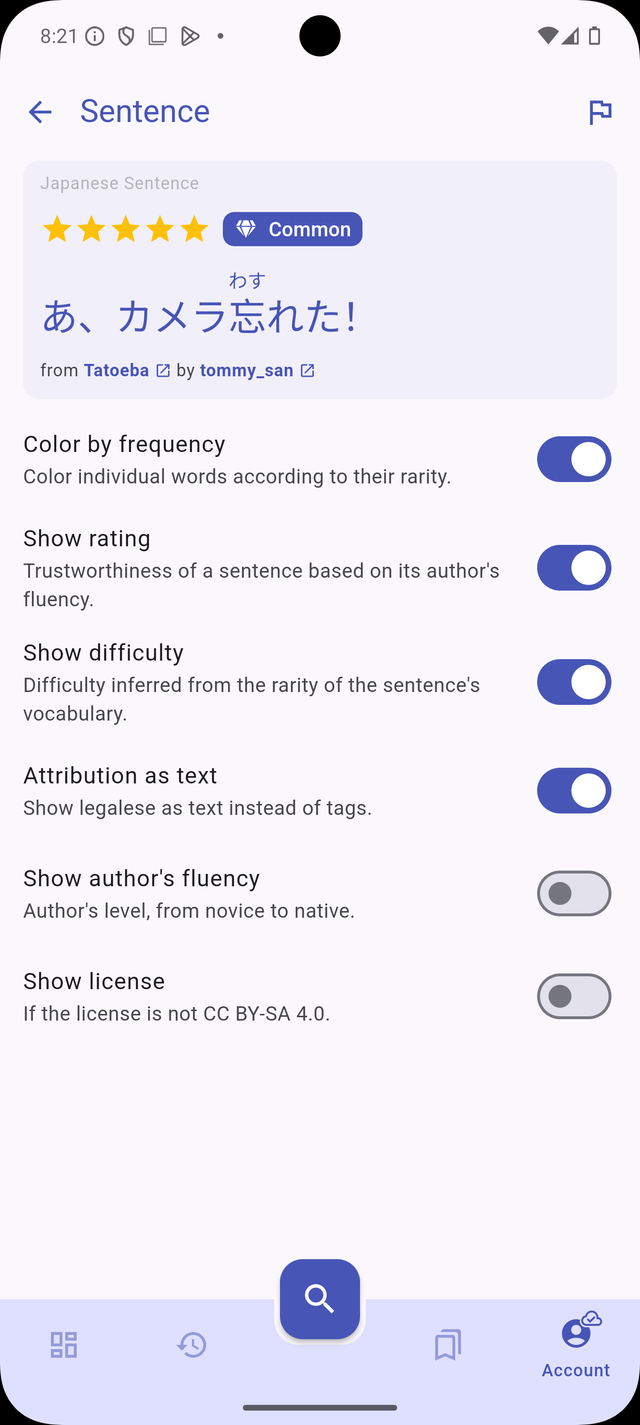
The Sentence settings let you choose what to display on the sentence card: color words by frequency, show the rating, the difficulty, the attribution (as text or icon), the author's fluency level, and the license.
Translation Card
Key Components of the Translation Card:
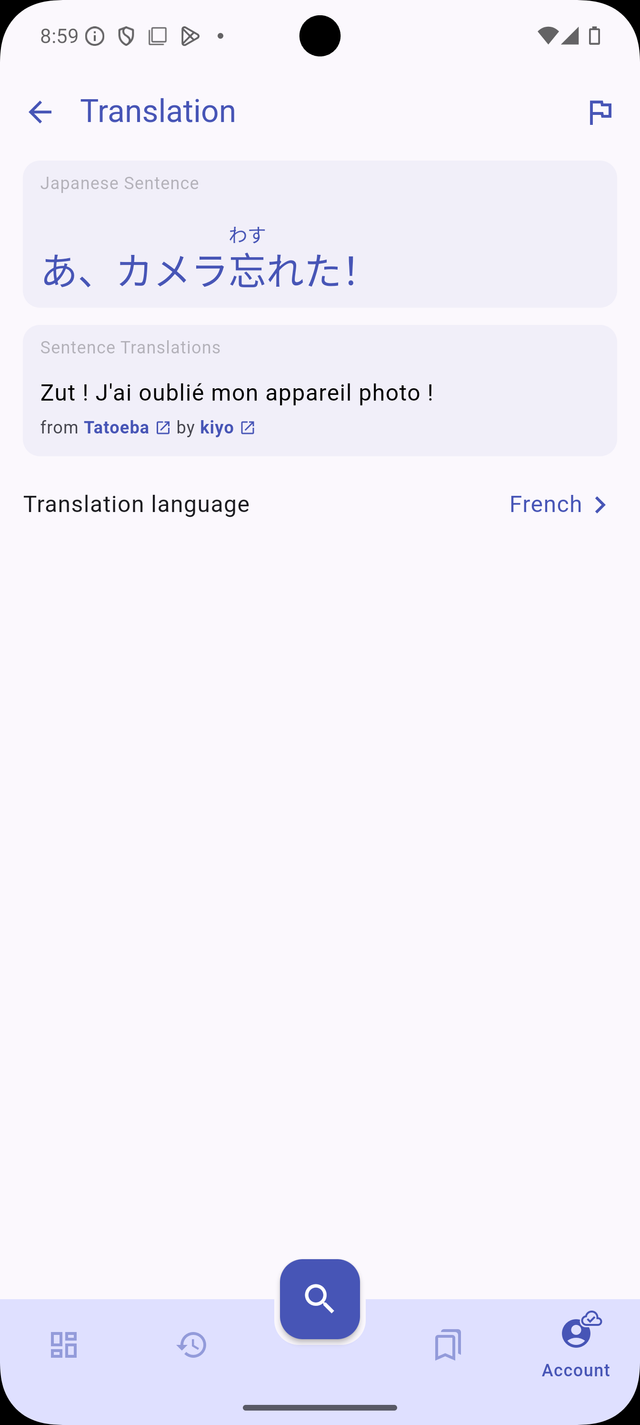
- Japanese Sentence: Displays the original sentence in Japanese. This is what you’re working on translating or understanding.
- Sentence Translations: Shows the translated sentence in the language of your choice. The translation is sourced from the Tatoeba Corpus, which is a collection of sentences and translations contributed by users worldwide.
- Translation Language: Allows you to select the language into which the Japanese sentence is translated. You can choose from multiple languages, making it a versatile tool for users of various linguistic backgrounds.

If the sentence has no Tatoeba translation, the Translator card offers to translate it for you: online via Google Translate, or on-device with the downloadable Google ML model (handy offline).
Tips for Effective Use:
- Cross-Referencing: Use the translation to cross-reference and confirm your understanding of the Japanese sentence. It helps in building vocabulary and understanding sentence structures.
- Practice Translation: Try to translate the Japanese sentence into your native language before checking the provided translation. This practice can improve your translation skills and reinforce language learning.
- Multiple Languages: If you are multilingual, viewing the sentence in more than one translation can deepen your understanding and provide insights into how different languages handle the same expression.
User-created Sentences
If the sentence you input isn't in our database, it will be stored as a user-created sentence. Here's some examples of sentences we just created:
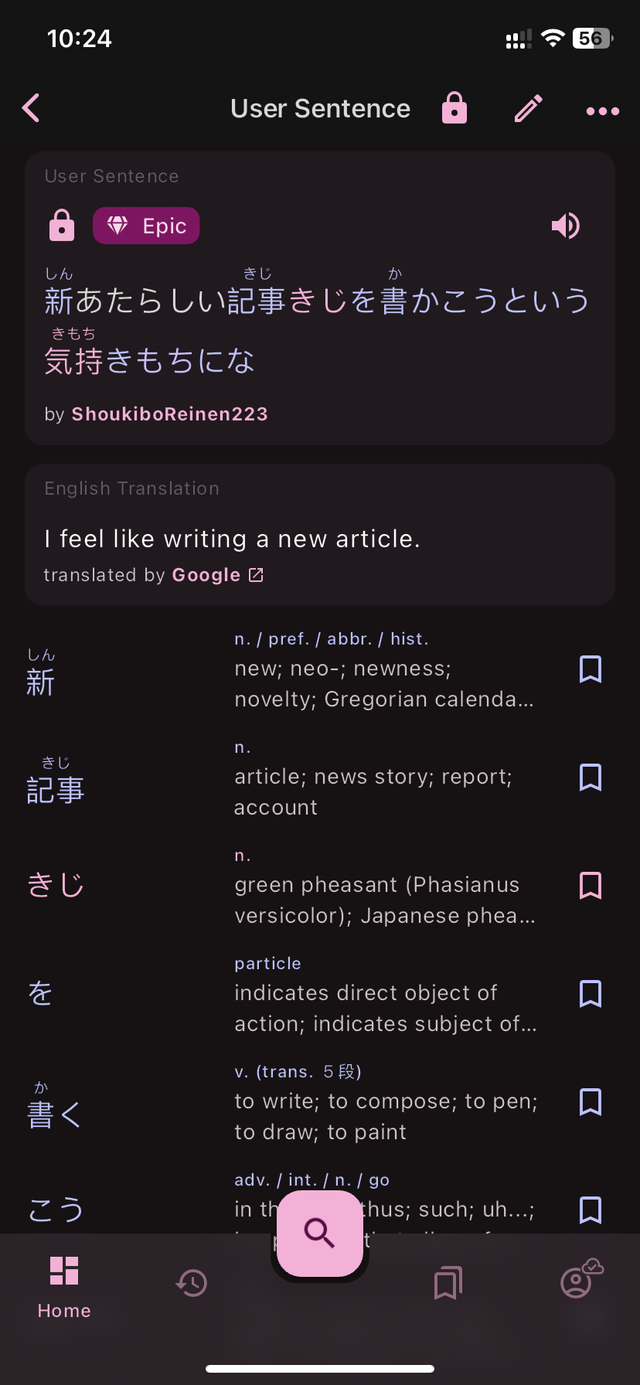
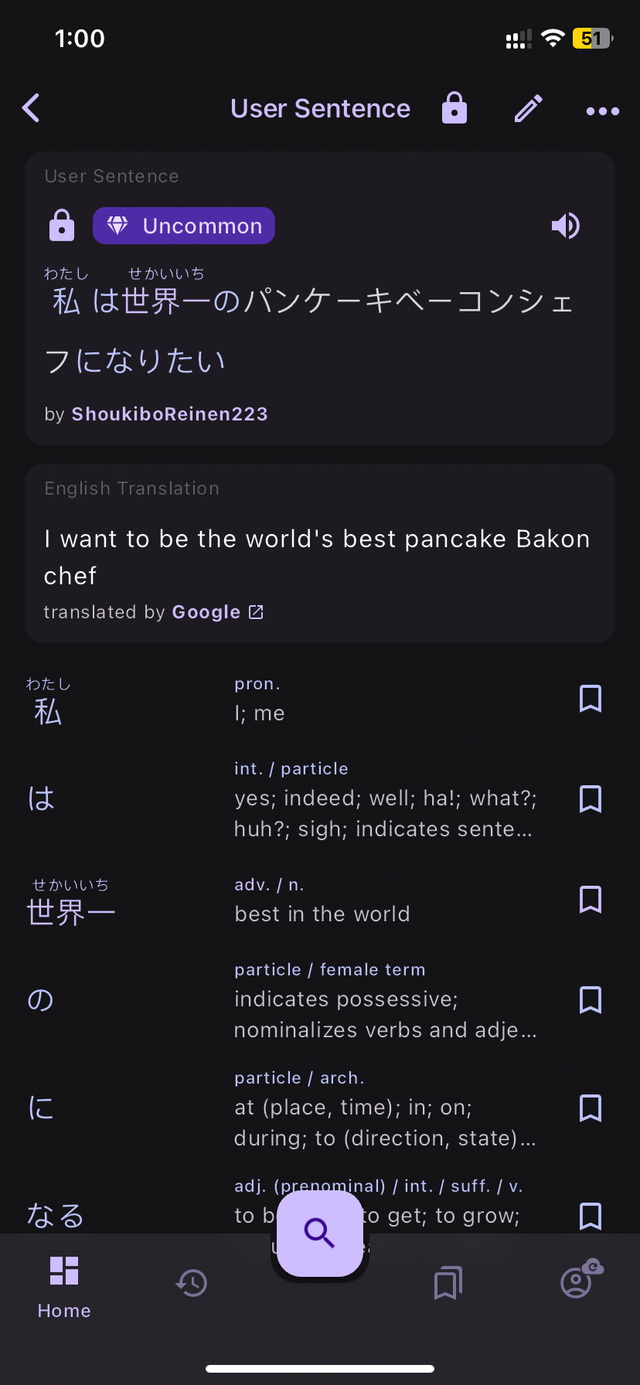
- The Sentence Analyzer color-codes words based on their frequency of usage, helping users to identify the most important words in the sentence.
- It also assigns a difficulty rating to the sentence based on its vocabulary, making it easy to gauge the level of difficulty of a given sentence.
You can edit your own sentence by tapping the "Edit" button on the top right corner of your screen. You may also change the privacy of your sentences, toggle it off to let others see your work.